Travel journal
Plan your Egypt journey well
Nebu Reisen editorial team
Published:
Updated:
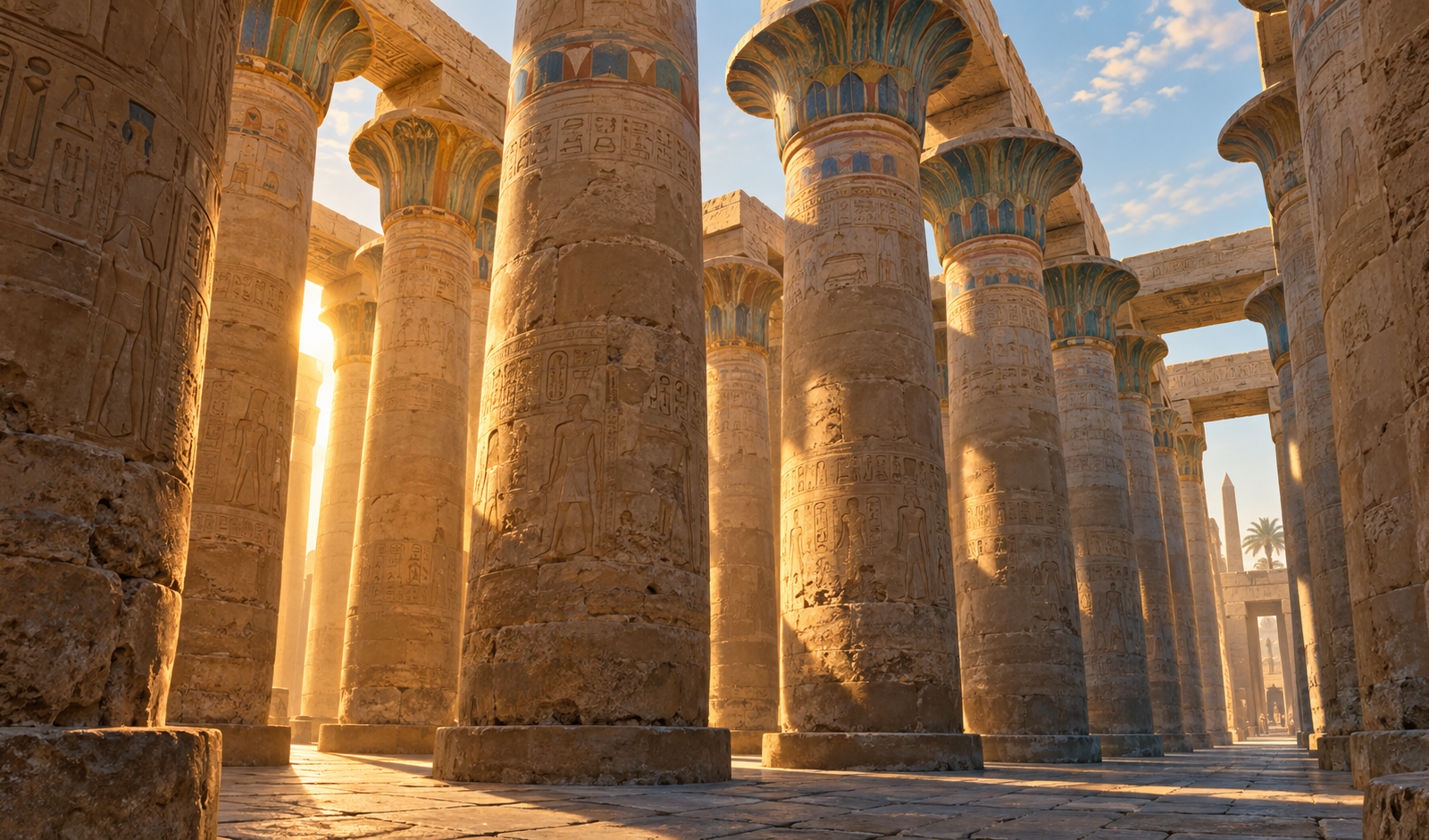
Imagine stepping between two immense columns. The view changes with each pace. High above you, traces of colour survive; lower down, a king faces a god. The hall seems to carry on forever. This is the moment to stop in Karnak, rather than look immediately for your next photograph.
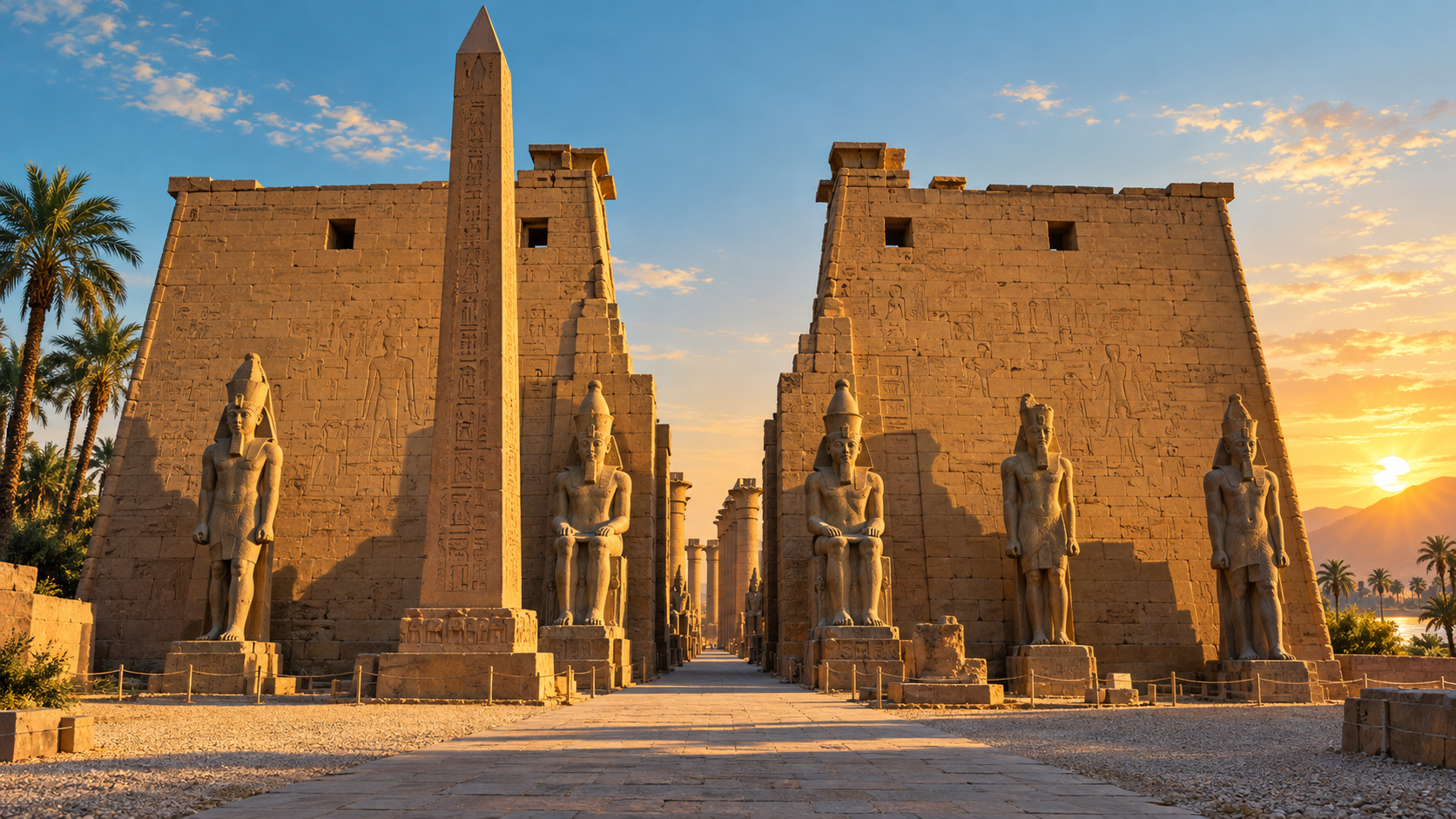
Karnak stands on Luxor’s east bank and was one of ancient Thebes’ most important sanctuaries. Its best-known precinct belongs to Amun. The columned hall, obelisks, courts and sacred lake form parts of a connected story: rulers wanted to show their closeness to the gods and preserve their own names.
Who lived in the temple?
Amun was central to the religious life of Thebes. Together with Mut and their son Khonsu, he forms the city’s familiar divine family. You do not need to memorise a catalogue of gods. Begin by thinking of the temple as a god’s house, with rooms, rituals and people responsible for its daily life.
The priesthood held considerable influence. Meanwhile, successive rulers added buildings and inscriptions. Karnak is not a single temple designed in one moment. One court leads into another, and neighbouring gateways tell different royal stories. Those layers make the place human: you meet the choices of different people rather than one anonymous mass of stone.
134 columns and a reason to look up
The Great Hypostyle Hall contains 134 columns. Seti I and Ramesses II shaped much of its surviving construction and decoration. The tallest central columns rise above their neighbours. Find a place where you can appreciate height, light and carved scenes together without blocking the flow of people along the main route.
Then choose one scene. Which figure is the king? Who is the god? What offering is being made? Such questions are more rewarding than trying to decode every hieroglyph. The picture expresses a religious ideal: the ruler is meant to maintain a proper relationship between people and gods. His gestures make that role visible.
Surviving colour also changes the familiar idea of sand-coloured Egypt. Imagine the hall painted. Let your eyes follow the shapes before settling on individual figures. One carefully understood detail can stay with you longer than a photograph that tries to fit the whole space onto a screen.
Hatshepsut put her name into the skyline
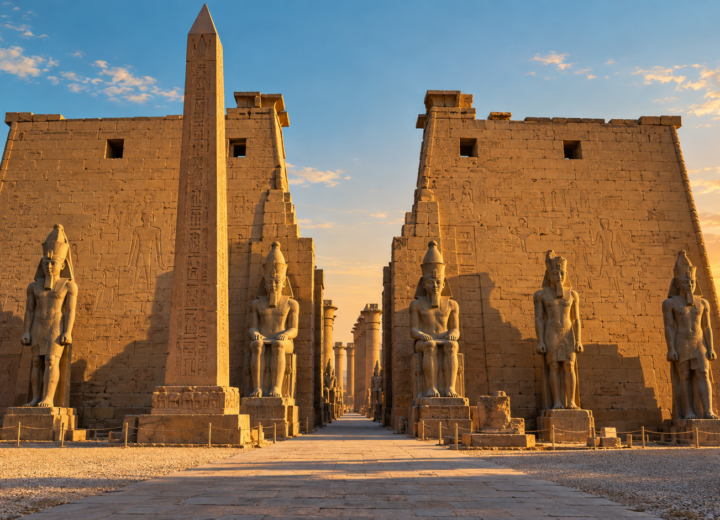
Hatshepsut’s tall obelisk is one of Karnak’s striking statements of royal presence. She ruled as pharaoh and expressed that authority in stone. The monument is more than a beautiful granite needle: it is part of the way she represented her relationship with Amun and the office of kingship.
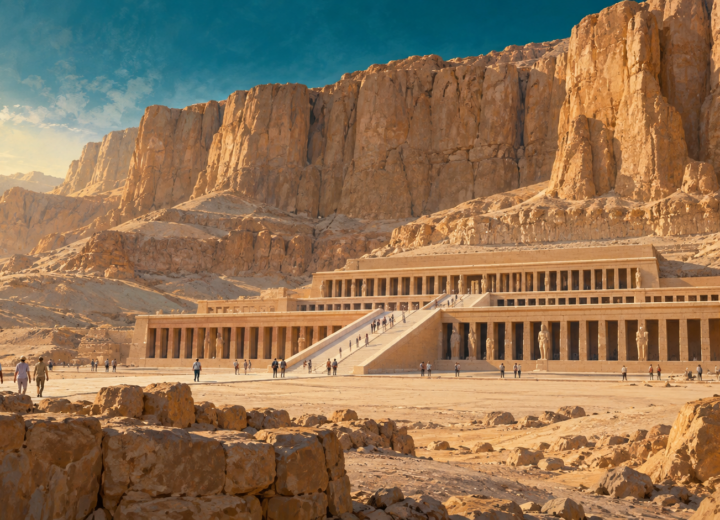
Continue her story at the terraced temple at Deir el-Bahari on the opposite bank. The contrast between Karnak’s closely packed buildings and the open cliff setting helps you appreciate both. They are different places requiring a transfer, not adjoining stops on a short walk.
A sacred lake and a journey of the gods
The sacred lake recalls the ritual purification of priests. After the great hall, it offers a different way to understand the sanctuary. Temples were not only impressive architecture; they were settings for repeated responsibilities and actions.
During the Opet Festival, divine images travelled in a ceremonial procession from Karnak to Luxor Temple. The avenue of sphinxes helps you imagine their connection. The story of this ceremonial journey brings the route to life, showing how the sanctuary belonged to the wider city.
A comfortable way to explore
- Get your bearings in the first court. Agree the principal route and the things you most want to understand.
- Enjoy the columned hall properly. Choose a few scenes rather than working through every wall.
- Connect the obelisks and lake. They introduce royal personalities and the everyday requirements of ritual.
- Add more only if it suits you. Smaller chapels are rewarding when time and energy allow. Not every area is automatically included in your admission.
Karnak covers a large site. Shade between columns does not mean the whole walk is sheltered. Discuss walking distances, rests and the return route, particularly in hot weather or with limited mobility. Do not touch carved surfaces. A good explanation can bring details alive without requiring you to reach every corner.
The private Thebes day tour starting in Luxor combines Karnak with the Valley of the Kings and Luxor Temple. Other Luxor excursions may suit a different starting point. Admission, sequence and breaks are governed by your personally confirmed offer.
Questions visitors ask about Karnak
Is Karnak the same place as Luxor Temple?
No. They are separate east-bank complexes linked historically by a processional avenue. Allow individual visiting time and check admission for each.
Do I need to know much Egyptology?
No. The Theban divine family, one explained relief and one ruler’s story make an excellent beginning. Clear guiding should open up the details without overwhelming you with names.
What should I notice in the Great Hypostyle Hall?
The different column heights, surviving colour and a chosen offering scene. A small, well-explained section is often more memorable than a hurried circuit of everything.
Can older visitors enjoy Karnak?
A shorter agreed route may work well. Some surfaces remain uneven and exposed to the sun. Ask about actual distances and rest opportunities rather than assuming complete step-free access.
Are all the chapels open?
Not automatically. Openings, special areas and ticket coverage can differ. Have any particular additional areas checked before your visit.
Can I combine Karnak with royal tombs?
Yes, but crossing to the west bank requires transfer time. A few thoughtfully chosen stops allow more room for stories and rest than an overloaded list of monuments.
Historical sources: Egyptian antiquities ministry: Karnak and the University of Memphis Great Hypostyle Hall Project.