Travel journal
Plan your Egypt journey well
Nebu Reisen editorial team
Published:
Updated:
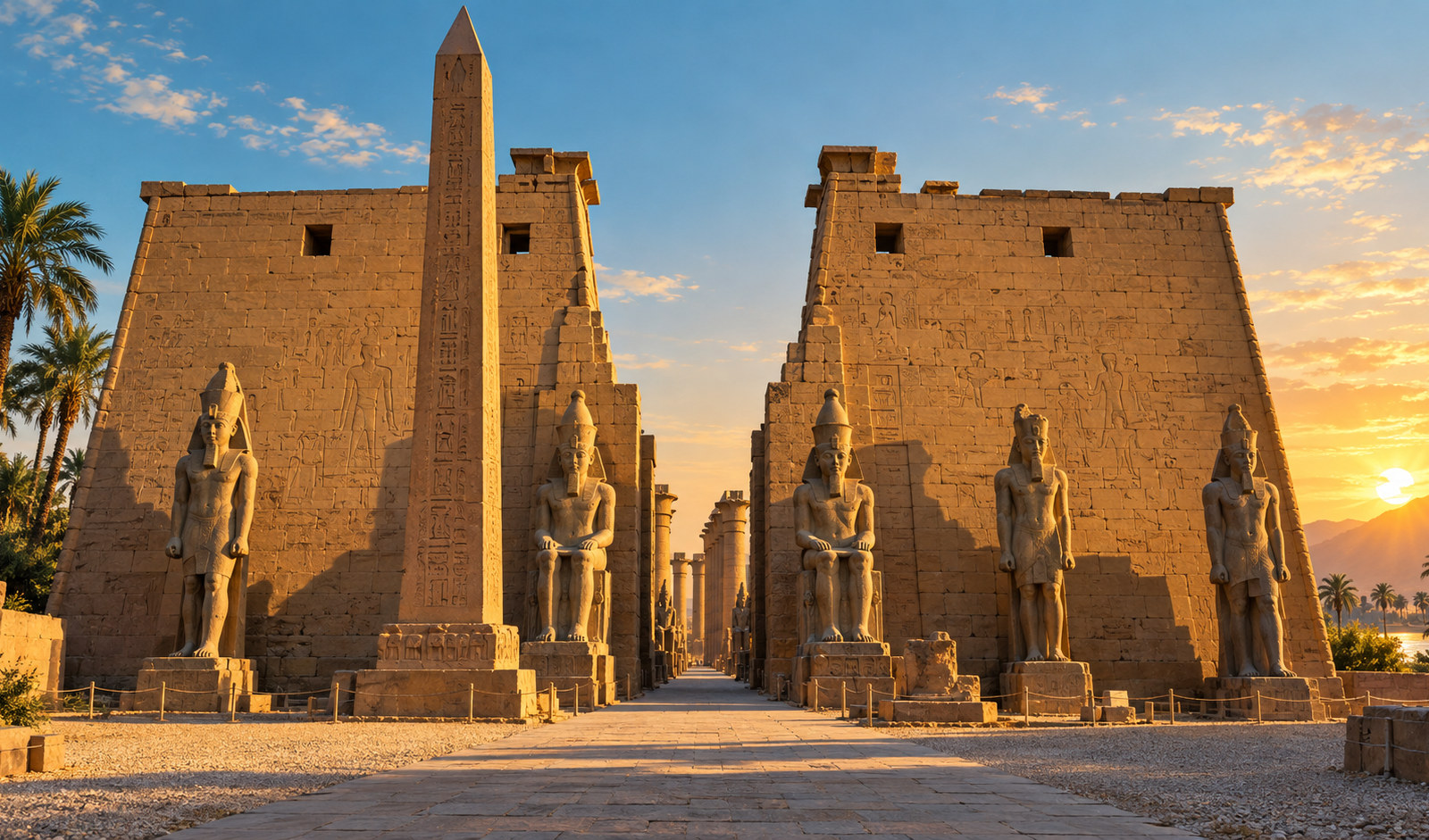
Imagine leaving a busy street and standing before the great royal figures at Luxor Temple. Behind you, the modern city keeps moving. Ahead begins a path between stone rulers and columns. That closeness is part of the appeal: the past is not far away in a silent desert, but right in the middle of life.
Luxor Temple is a destination in its own right, not simply another name for a smaller Karnak. Its courts, royal images and religious stories make a rewarding connected walk. You do not need to know every pharaoh or read every inscription. A gateway, a procession and a story about a king’s origins already offer a fascinating thread.
Ramesses at the entrance: a king makes his presence felt
Pause at the entrance before walking through. Ramesses II added the great pylon, a court and monumental images of his rule. The figures communicated more than physical size. They made the king’s presence visible and connected his authority with a religious understanding of order.
A pair of obelisks originally stood before the gateway. One is now in Paris, where it was erected in 1836. The surviving obelisk makes that story easy to picture on site. Notice its position beside the entrance and imagine the original pair. A familiar stone becomes a reminder of a space that has changed.
Ramesses did not build the entire temple, though. Major parts belong to Amenhotep III, and an older surviving shrine dates to Hatshepsut. Different rulers continued building at a place whose importance lasted beyond their own lifetimes.
A divine family comes to visit
The Opet festival connects Luxor with Karnak Temple. The sacred images of Amun, Mut and Khonsu travelled from Karnak to Luxor. Amun represented a great divine power, Mut his divine partner and Khonsu the moon. The procession made the relationship between gods, temples and kingship visible.
Try picturing that festival world: people, movement and a ceremonial journey through the city. The stone spaces were not merely buildings to admire. They provided a setting for actions intended to renew the relationship between the ruler and the gods.
Luxor Temple’s orientation towards Karnak is significant too. It follows that special connection rather than fitting a simple picture of an Egyptian temple on an east-west line. A brief explanation in the court helps you understand the two complexes together.
Among the columns, the story becomes a place
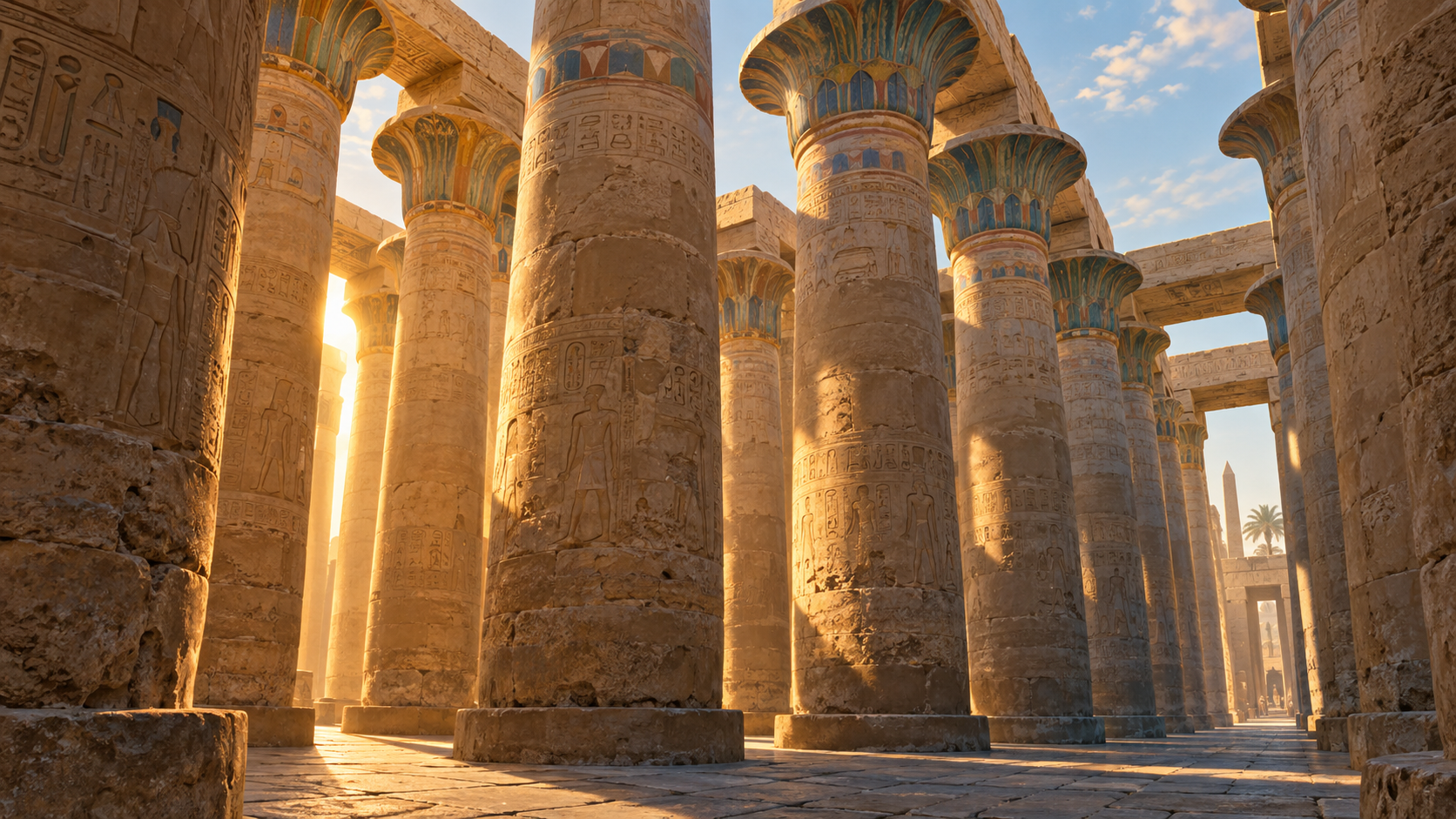
The great colonnade has two rows of seven tall columns. Its decoration was completed under Tutankhamun and Horemheb. Ask to see a procession scene accessible during your visit. Where are people walking, how are sacred images carried and what gives the occasion its ceremonial feeling?
Afterwards, let your gaze simply travel upwards. A good temple visit does not need a new fact at every step. Alternating one clearly told scene with a quiet impression makes the architecture more powerful. This matters especially if you have already explored other major sights in Luxor.
How a king told the story of his origins
Images of Amenhotep III’s divine birth at Luxor Temple show how the ruler expressed religious legitimacy. Amun appears in the form of his royal father. This visual story connects the king with the divine and belongs to the religious presentation of kingship.
The useful question for a visitor is therefore not only: whose name is written here? Ask also: what image of himself did this ruler want to leave behind? The reliefs become carefully crafted messages addressed to people and gods.
A place with more than one life
During the Roman period, the complex became part of a military establishment. Worship of the Roman emperors also left its imagery. In one room, earlier temple walls were covered with plaster and paintings for a new purpose. The site’s story did not end with the last great pharaoh.
When your guide points out different building and use phases, look for the transitions. Those differences give the temple depth. They tell of people finding new ways to use a place that already mattered.
Plan a walk you can comfortably enjoy
A clear route starts at the entrance, passes through a court towards the colonnade and then adds a selected scene inside. The exact path depends on open areas and your needs. If older travellers are joining, discuss walking distances, uneven surfaces and rests in advance.
A visit in later light or with illumination can offer a lovely different atmosphere when opening arrangements and your itinerary permit. It is not automatically included in every day tour. Confirm the time window, admission and transport, and bring water, sun protection and securely fitting shoes.
Our private day tour through ancient Thebes starting in Luxor lists Luxor Temple in its programme. Further Luxor excursions can help you plan. If you also want to see the Valley of the Kings, allow for the additional journey to the west bank. A day full of good stories still needs breathing room between its biggest impressions.
Questions visitors ask about Luxor Temple
Are Luxor Temple and Karnak the same complex?
No. They are separate temple complexes. Their religious connection becomes especially clear through the story of the Opet festival.
Why is only one obelisk left at the entrance?
The second obelisk is now in Paris. At Luxor, the surviving stone helps you picture the original pair.
Did Ramesses II build the whole temple?
No. He added important parts, including the pylon and court. Major earlier areas belong to Amenhotep III, and several rulers contributed to the complex.
Can I visit the temple in the evening?
Check the arrangements for your travel date and booked itinerary. Do not assume every tour includes an illuminated evening visit.
Is the walk comfortable for older travellers?
It can be tailored, but paths, surfaces and time spent standing should be discussed specifically. Rests and selected highlights help.
Which explanation should I ask for?
Ask about the connection between the Opet procession, the columns and kingship. One clearly explained scene makes the rest of the walk easier to understand.
Source: Egyptian antiquities authority: Luxor Temple’s history, Opet festival and building phases. Have opening arrangements and access confirmed for your travel date.