Travel journal
Plan your Egypt journey well
Nebu Reisen editorial team
Published:
Updated:
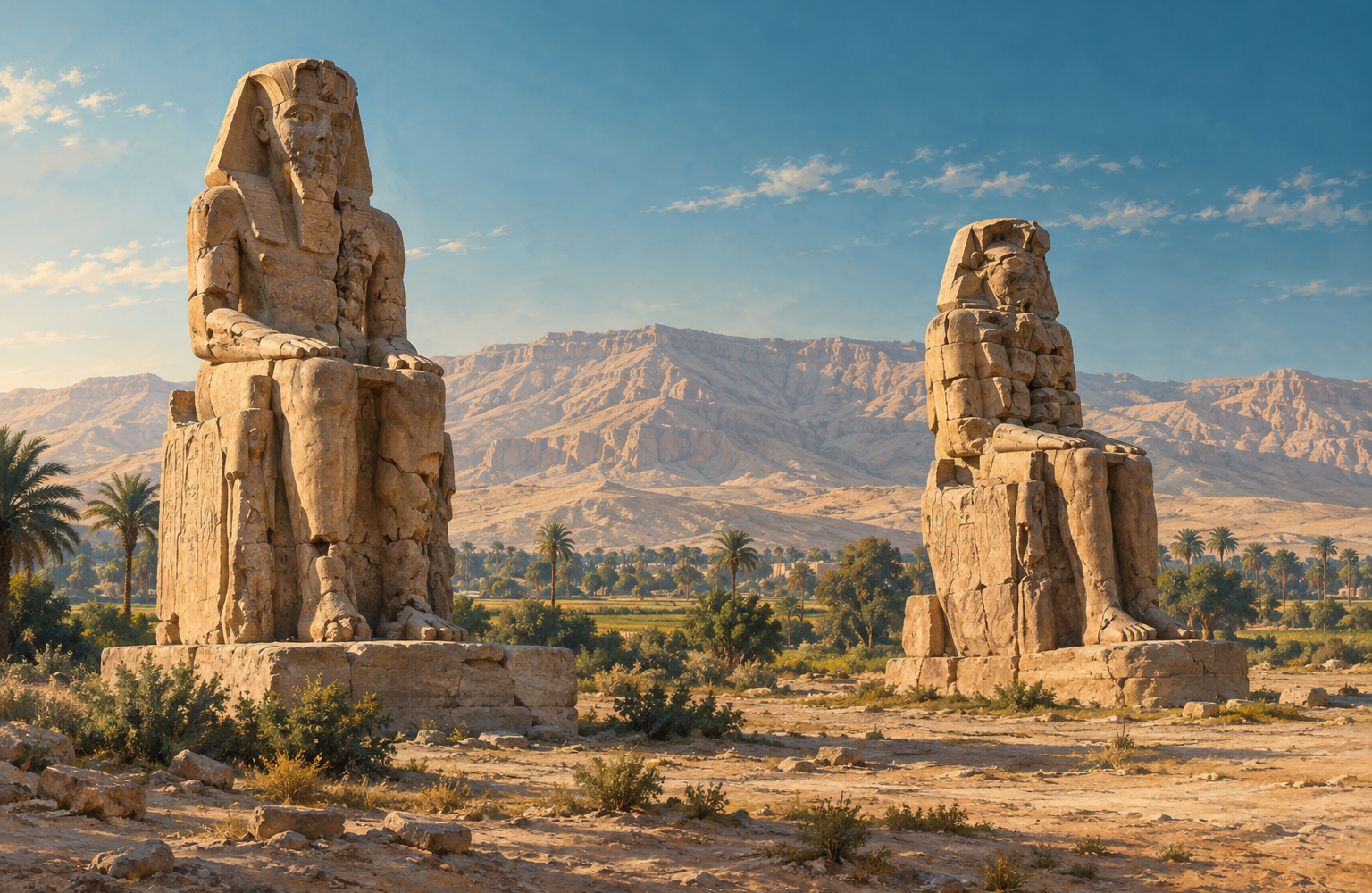
Imagine standing before two enormous seated royal figures. Behind them is an open landscape, and at first the place seems explained by a photograph. Then you hear that a great mortuary temple once began here, and that one figure was famous in antiquity for a voice at sunrise. Suddenly a short stop becomes a story.
The Colossi of Memnon are among the familiar sights on Luxor’s west bank. A visit can remain manageable while still revealing plenty. There is no need to stretch the stop artificially. The pleasure comes from understanding who you see, what stood behind the figures and why later visitors gave them a different name.
Two figures, one pharaoh
Both colossi represent Amenhotep III, not two different kings. The enormous seated quartzite figures stood at the main entrance of his mortuary temple. At roughly twenty metres high, they made the royal presence visible before anyone entered the complex.
First notice their shared posture. The king sits calmly and permanently, while people around him seem small. Such images were intended to communicate rule and endurance. They belonged to a religious world in which remembrance of the king continued to be maintained after death.
The relationship between statue and landscape is interesting too. Today you see the colossi against a much more open space than ancient visitors experienced. Try imagining the gateway and temple beyond them. That picture restores their original setting in your mind.
A voice in the morning light
A particularly touching story belongs to the northern figure. After earthquake damage, it was reported in antiquity to produce a sound at sunrise. Greek visitors connected that sound with Memnon, a hero from their own mythical world.
Memnon was regarded as the son of the dawn, Eos, called Aurora by the Romans. The sound was interpreted as the son calling to his mother. In that reading, morning light became a meeting between mother and child. This human idea made a foreign Egyptian royal statue feel familiar to travellers from another culture.
The ancient accounts belong to the statue’s later history. After a repair under the Roman emperor Septimius Severus, the famous sound fell silent. Today its memory forms part of the explanation at the site. You encounter not only Egyptian art but the ways visitors of other periods found their own stories within it.
What disappeared behind the colossi, and what is being rediscovered
Amenhotep III’s mortuary temple was much more than a background for two statues. It served the royal mortuary cult. Large parts of the complex were lost over time, and the colossi became its best-known visible reminder.
Archaeological work and restoration continue in the temple area. The Egyptian antiquities authority reports statues, columns and other architectural elements among the discoveries. Such news shows that the site is still offering fresh insight into its original form.
Do not assume that every newly reported find will be accessible during your walk. A more useful question for your guide is: what can we recognise today, and how does it fit into the earlier complex? A clear explanation of visible traces offers more than a long list of inaccessible discoveries.
A good photo stop can tell a story too
Start by taking in both figures together. Hear the short story of the pharaoh and temple before finding your favourite photograph. Finally, notice differences in preservation and any smaller details your guide can show from the permitted visitor area.
A picture with the colossi makes a lovely memory. Better still is knowing afterwards why both represent the same king and why they carry a Greek name. Those two answers fit into a brief pause while giving it real substance.
See the west bank as a connected journey
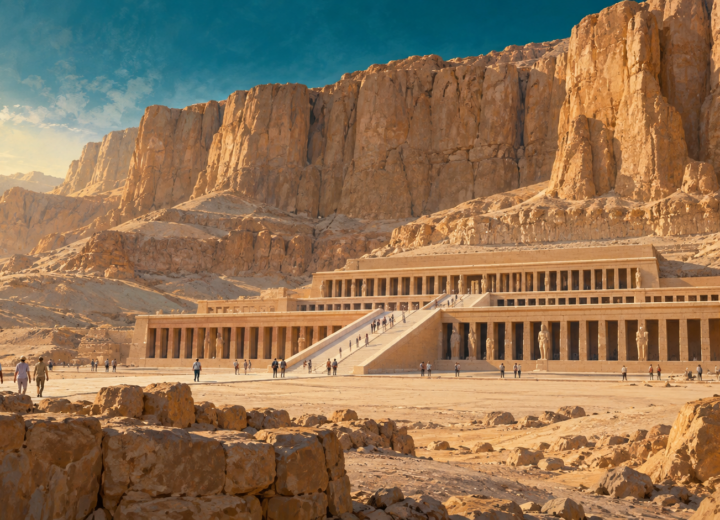
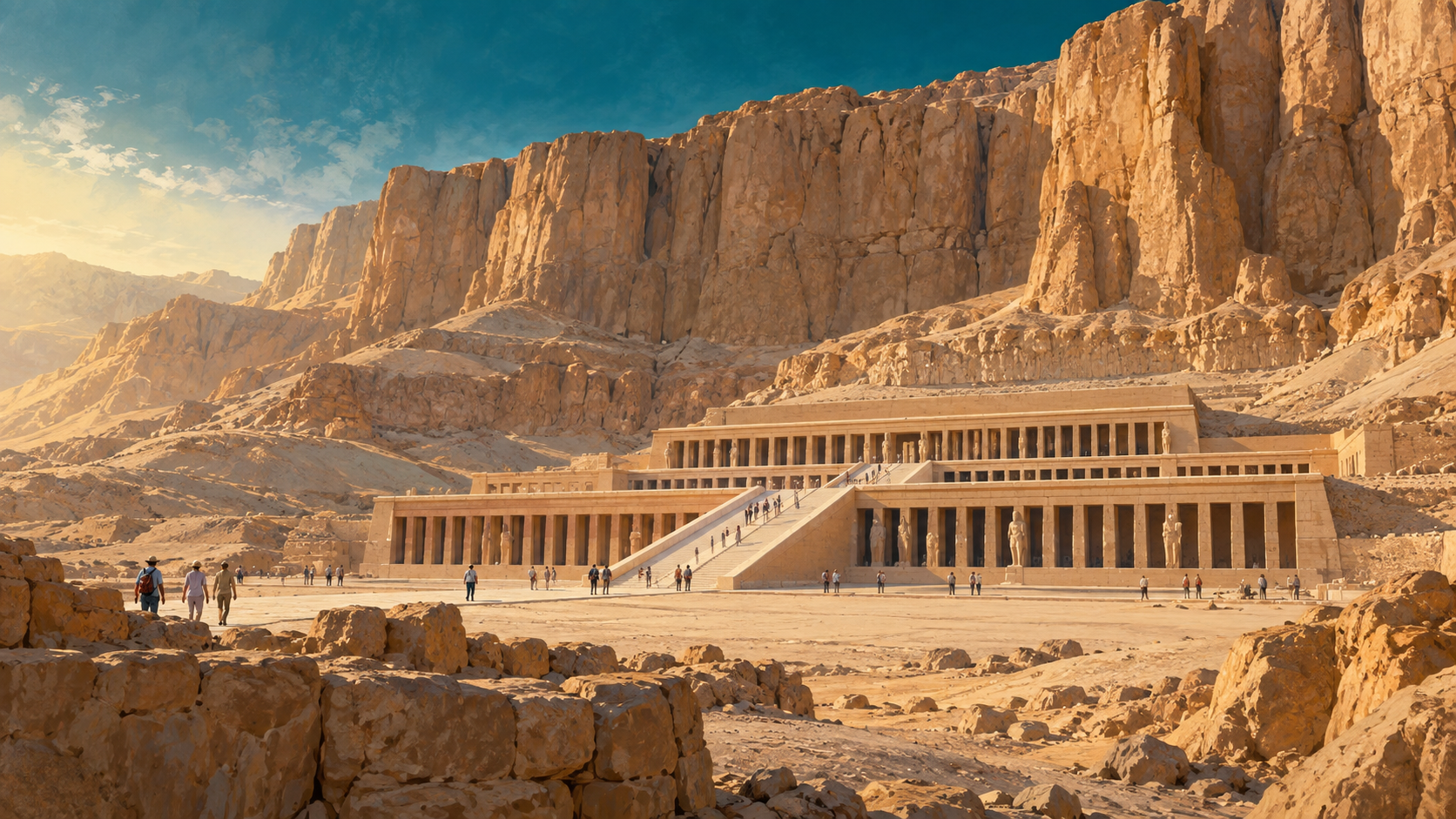
Hatshepsut’s Temple presents another form of royal remembrance: clear terraces beneath a great cliff. The Valley of the Kings takes you into the hidden world of burial. These places connect in your understanding without becoming interchangeable.
The private Luxor excursion starting in Hurghada lists the Colossi of Memnon in its programme. It begins in Hurghada. If you are already staying in Luxor, discuss an appropriate local arrangement. Further Luxor excursions help you compare the options.
A comfortable stop for everyone travelling
The open viewing area can be sunny. Water and sun protection matter even during a short pause. Have a safe place to stand pointed out rather than stepping onto the road or into restricted areas for a photograph.
Older travellers benefit from discussing disembarking, ground conditions and the walk from the vehicle. A short stop is not automatically effortless. If standing for long is difficult, the explanation and photo opportunity should be arranged as clearly and comfortably as possible.
Questions visitors ask about the Colossi of Memnon
Do the colossi represent different kings?
No. Both show Amenhotep III and stood at the entrance of his mortuary temple.
Why are they called the Colossi of Memnon?
Greek visitors connected the once-reported sound of the northern statue with the mythical hero Memnon. The name remained associated with the pair.
Can I still hear the statue singing today?
The famous voice belongs to ancient accounts. After a repair under Septimius Severus the sound was no longer heard; today visitors hear its story.
Are the colossi the whole former temple?
No. They marked its main entrance. The wider temple area survives only partly and is undergoing archaeological investigation and conservation.
Is the stop worthwhile without a long tour?
Yes. Seeing the pair together, hearing about Amenhotep and learning the morning-light story give a brief pause a lovely focus.
What should I clarify if I have limited mobility?
Ask about disembarking, paths, ground conditions and assistance. Plan a safe viewpoint and avoid unnecessary long periods of standing.
Sources: University of Memphis: Colossi of Memnon, Egyptian antiquities authority: temple research and conservation and UNESCO: Ancient Thebes with its Necropolis.