Travel journal
Plan your Egypt journey well
Nebu Reisen editorial team
Published:
Updated:
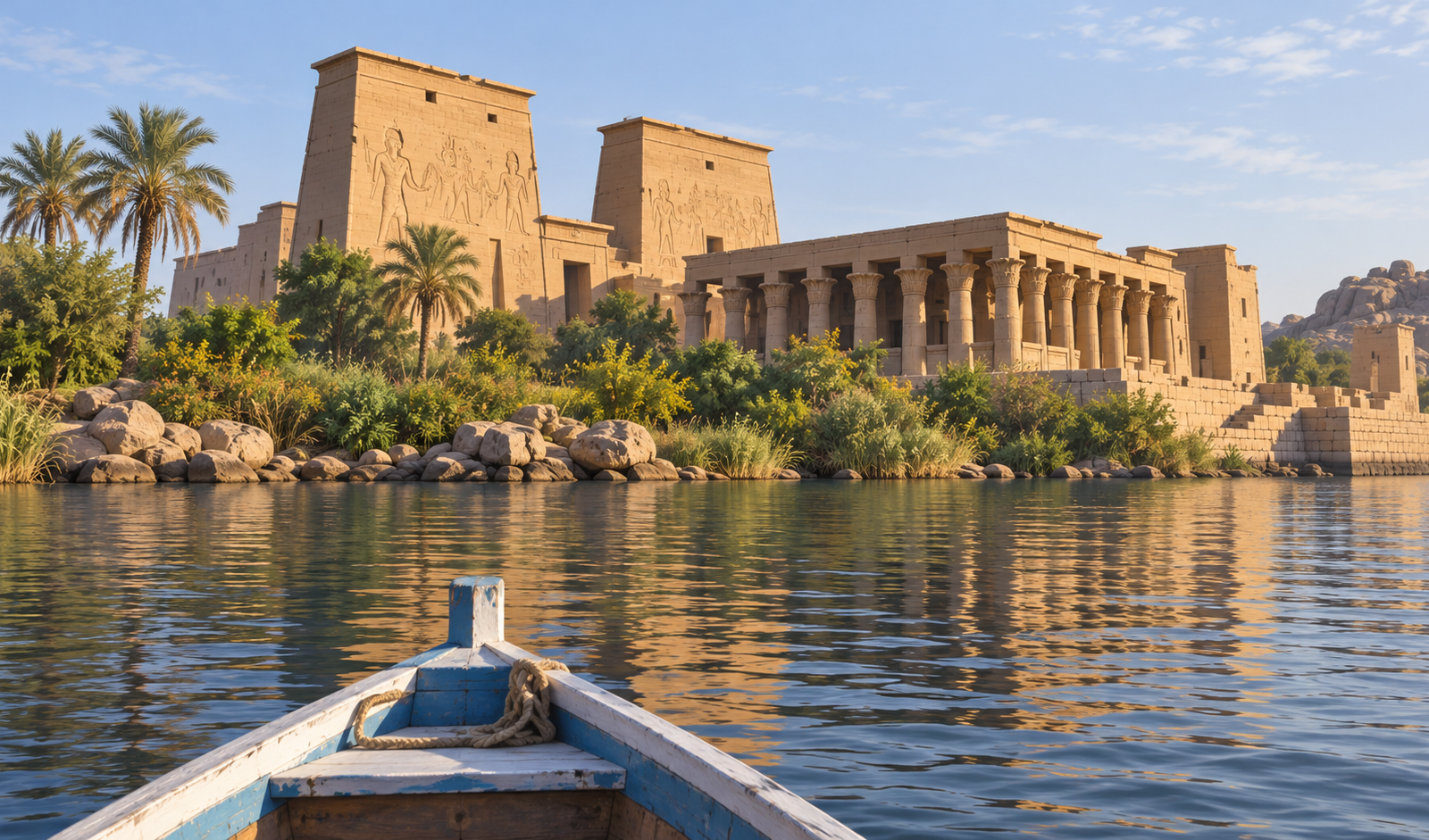
Imagine your boat approaching an island, with temple columns appearing between the water and the sky. The engine grows quieter and your attention settles on a stone gateway. Before anyone mentions a date, Philae has already given you something: the feeling of genuinely arriving somewhere special.
Philae Temple near Aswan is a lovely choice for travellers who enjoy history and landscape together. The monuments now stand on Agilkia, where they were relocated during the rescue of the Nubian monuments. Their central story, however, begins with a goddess who protects, searches and fights for her child: Isis.
Isis: a goddess with a deeply human story
In Egyptian myths, Isis loses her husband Osiris through the violence of his brother Seth. She searches for him, restores him and later protects her son Horus. The stories vary in their details, but the themes feel familiar: loss, care and the hope of new life.
This story gives your visit a personal direction. Isis was associated with protection, motherhood and divine power. Osiris became the ruler of the afterlife, while Horus was linked with the living king. Temple images bring this divine family into view and show how rulers expressed their standing through closeness to the gods.
When you reach a relief, do not start by trying to remember every name. Ask about the gestures. Who is presenting something, who receives it and how can you recognise the deity? One clear image opens more doors than a hurried list of dynasties.
What to notice between gateways and columns
Much of the Isis temple belongs to the Ptolemaic period; construction began under Ptolemy II. Roman rulers left their marks later. Philae therefore introduces you to more than one chapter of Egypt’s past, showing how older religious forms continued through changing rule.
The birth house, called a mammisi, is especially engaging. Its images celebrate Horus and his divine origins. The Egyptian antiquities authority describes scenes of Isis nursing Horus in the marshes. Ask your guide which related images can be seen in the areas accessible during your visit. With the mother-and-child story in mind, smaller details become easier to understand.
The ensemble also includes a temple of Hathor and the so-called Kiosk of Trajan. The kiosk’s open columns make a different impression from the massive gateways. Its imagery connects the Roman emperor with Egyptian gods. Comparing the forms is more satisfying than collecting another photograph at every building.
A temple that kept finding another life
Philae was among the last active places of worship of the ancient Egyptian religion. Later Christian use also left traces. That makes the island interesting for anyone curious about how a place continues living across centuries.
The last dated hieroglyphic inscription, from AD 394, is at Philae. Such a small mark can be as moving as a great column: someone was still using this writing while the surrounding world was changing. Ask which evidence along your route belongs to which phase. The visible traces do not all tell the same story.
How an island world was rescued
The modern rescue belongs to the experience too. Changes in water levels threatened the monuments at their original location. Under the international UNESCO campaign, the buildings were carefully dismantled and reassembled on Agilkia. Philae forms part of the World Heritage property of the Nubian monuments.
Today’s island visit therefore combines ancient architecture with an extraordinary achievement in conservation. As you walk among the columns, imagine the coordination required to keep these buildings understandable as a connected place.
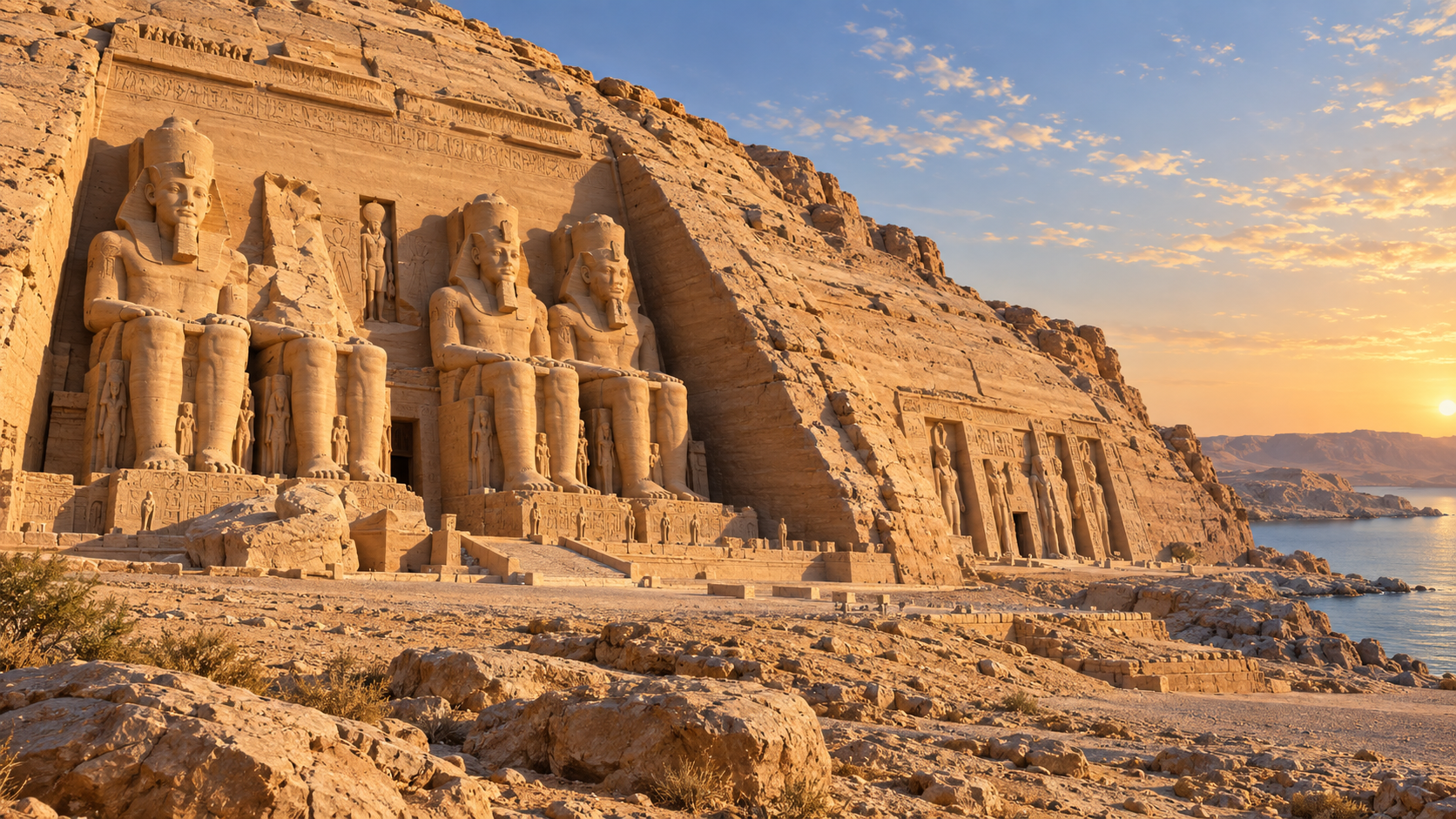
The temples of Abu Simbel tell another chapter of that rescue. They are not beside Philae, however. Seeing both requires a travel plan with separate journeys and enough time.
Give the visit a comfortable rhythm
Include the boat approach in your planning, not just the temple itself. Boarding and disembarking can involve steps, boat movement and changes in height. If you need assistance, explain that beforehand and clarify the particular landing place and boarding arrangements. A general promise is not a substitute for suitable help.
A clear island route works well: take in the whole setting, hear a story in the Isis temple, then explore selected neighbouring buildings. Bring water, sun protection and shoes with a secure grip. Rest stops should be planned before anyone feels exhausted.
Our four-day Nile cruise starting in Aswan and ending in Luxor lists Philae in its itinerary. Our Aswan excursions offer further inspiration. Discuss the boat transfer, admission, guiding and actual schedule before booking. A lovely island visit should fit the way you enjoy travelling.
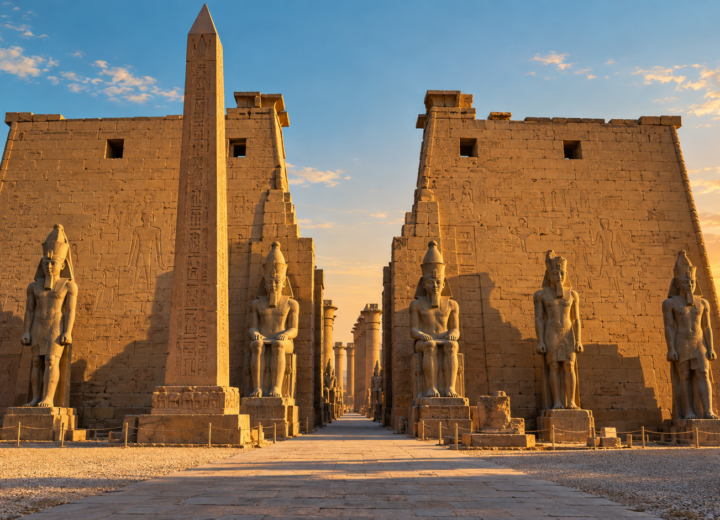
If your journey continues in Luxor, Karnak Temple introduces the divine family of Amun, Mut and Khonsu. After Isis and Horus, this makes a rewarding comparison between two great temple worlds.
Questions visitors ask about Philae Temple
Is the temple still on the original island of Philae?
No. The ensemble was moved to the nearby island of Agilkia. The name Philae remained associated with the monuments.
Why is Isis so important here?
The main temple is dedicated to her. Her protective role as a mother and her relationship with Osiris and Horus shape the site’s religious stories.
Is the boat ride automatically included in every excursion?
You reach the island by boat, but booked services vary. Have the costs and organisation explicitly confirmed.
Can I visit Philae and Abu Simbel together without further planning?
No. They are separate sights with their own journeys. Clarify the distances, available days and the pace you prefer.
Can I visit with limited mobility?
That particularly depends on the boat, landing place, assistance and paths. Describe your needs in advance rather than relying on a general claim of accessibility.
What should I prioritise if I have little time?
The overall setting, one well-explained scene in the Isis temple and a carefully chosen neighbouring building give your visit a clear thread.
Sources: Egyptian antiquities authority: Philae, British Museum: Egyptian deities and UNESCO: Nubian monuments.