Travel journal
Plan your Egypt journey well
Nebu Reisen editorial team
Published:
Updated:
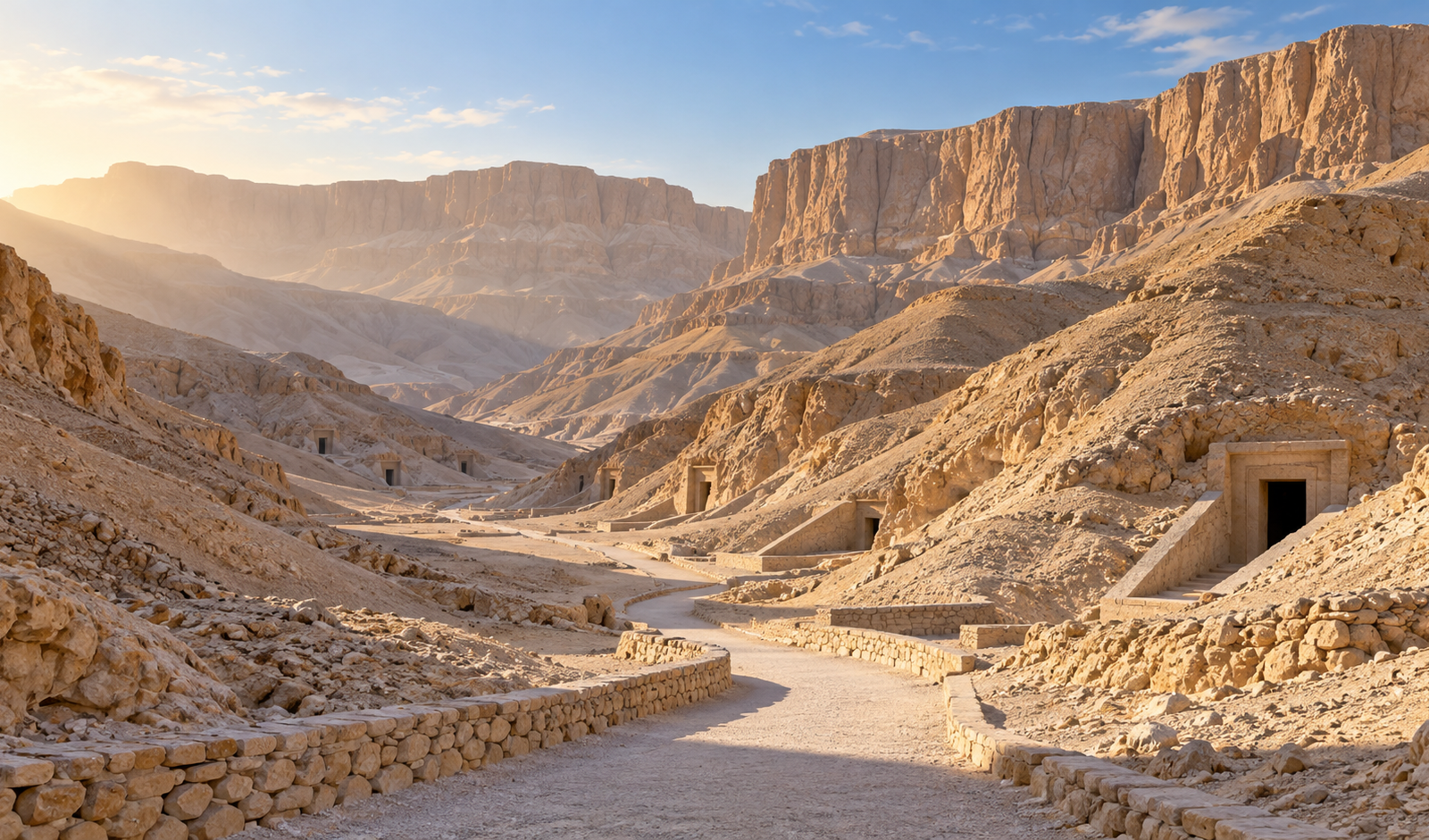
Imagine standing between pale cliffs on Luxor’s west bank. From outside, a tomb entrance looks almost modest. Then a passage takes you underground, and the walls fill with colours, divine figures and boats. Suddenly the dry mountain no longer feels empty. People created an entire world here for life after death.
The Valley of the Kings is one of Luxor’s most memorable sights. It becomes more rewarding when you stop counting how many tombs you can tick off. One tomb explained clearly can stay with you longer than a rushed march through five. The best choice depends on which tombs are open, what interests you and a pace that keeps your curiosity alive.
Why the pharaohs disappeared into the mountain
The rulers of the New Kingdom had tombs cut into the rock of western Thebes. Members of the royal family and other important people were also buried in the valley. This was not simply a collection of identical royal chambers.
The west bank fitted a religious understanding of sunset. When the sun disappeared in the west, ancient Egyptians believed its journey through the night began. The dead also hoped for renewal. That helps explain why a place among bare mountains was not intended as a bleak final stop. It was meant to make another existence possible.
Security mattered too. An underground tomb was less conspicuous than a great pyramid. Hidden did not mean safe forever, however: many tombs were robbed in antiquity. That tension between magnificent preparations and human vulnerability gives the story a surprisingly personal edge.
The walls are a guide, not wallpaper
Rather than searching immediately for a famous figure, look for a sequence: a boat, a deity, a group of beings, then another scene. Many royal funerary texts and images describe the sun god’s passage through the underworld. In the Amduat, the night is organised into twelve hours.
These pictures may seem mysterious to us. For the people who commissioned them, they were intended to convey knowledge, protection and the possibility of rebirth. Osiris represented the afterlife; the sun god expressed daily renewal. With that hope of renewal in mind, the night scenes become a path along which the king was meant to be accompanied and protected.
Ask your guide to explain just one wall. Who appears, what is happening and why was it supposed to help the king? Once you understand that scene, you can recognise further details yourself. A small question turns the visit into a conversation instead of a test full of unfamiliar names.
Tutankhamun: a small tomb with a huge story
Tutankhamun’s tomb is small compared with many other royal tombs. Its fame comes mainly from its discovery in 1922 by Howard Carter and his team, and the extraordinary equipment that had survived inside. Size and historical importance are not the same thing here.
If your main interest is extensive, richly decorated spaces, discuss different options. Tutankhamun makes a fascinating story, but he is not automatically the best first choice for every visitor. His tomb and other particularly famous tombs may have separate admission arrangements.
The objects from his burial let you follow this world beyond the valley. Our guide to the Grand Egyptian Museum near Giza explores the connections between royal masks, images and beliefs about the afterlife. That museum is a separate destination, not part of your visit in Luxor.
A visit that leaves room to enjoy the details
Start with a short overview outdoors. Check which tombs are open and choose one suited to your interests and mobility. Inside, pause at a particular image rather than walking straight past everything. Then decide whether you would enjoy another tomb.
Paths may include slopes, steps and uneven ground. Interiors can be warm and confined; some shade outside is not a substitute for a planned rest. Comfortable supportive shoes, water and sun protection help. If stairs are difficult or standing for long periods is tiring, explain that before booking. A tailored route is more useful than a general promise that a tomb is easily accessible.
Take photographs only where and how the current rules allow. A picture makes a lovely reminder, but a few quiet minutes without a screen can make the colours more memorable. Tickets, photography rules and open tombs should be checked for your travel date.
One west bank, several different stories
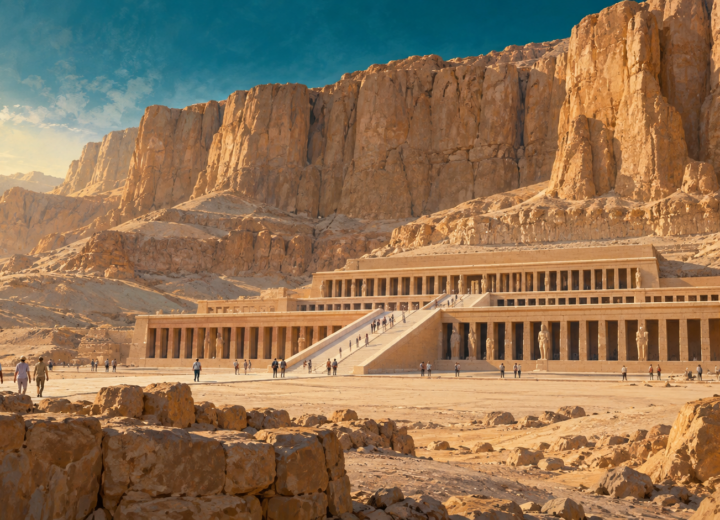
After the hidden world of the tombs, Hatshepsut’s Temple feels like its opposite: open terraces against a great cliff. A temple for the royal mortuary cult and a royal burial place performed different roles, though. That contrast makes the two places rewarding companions.
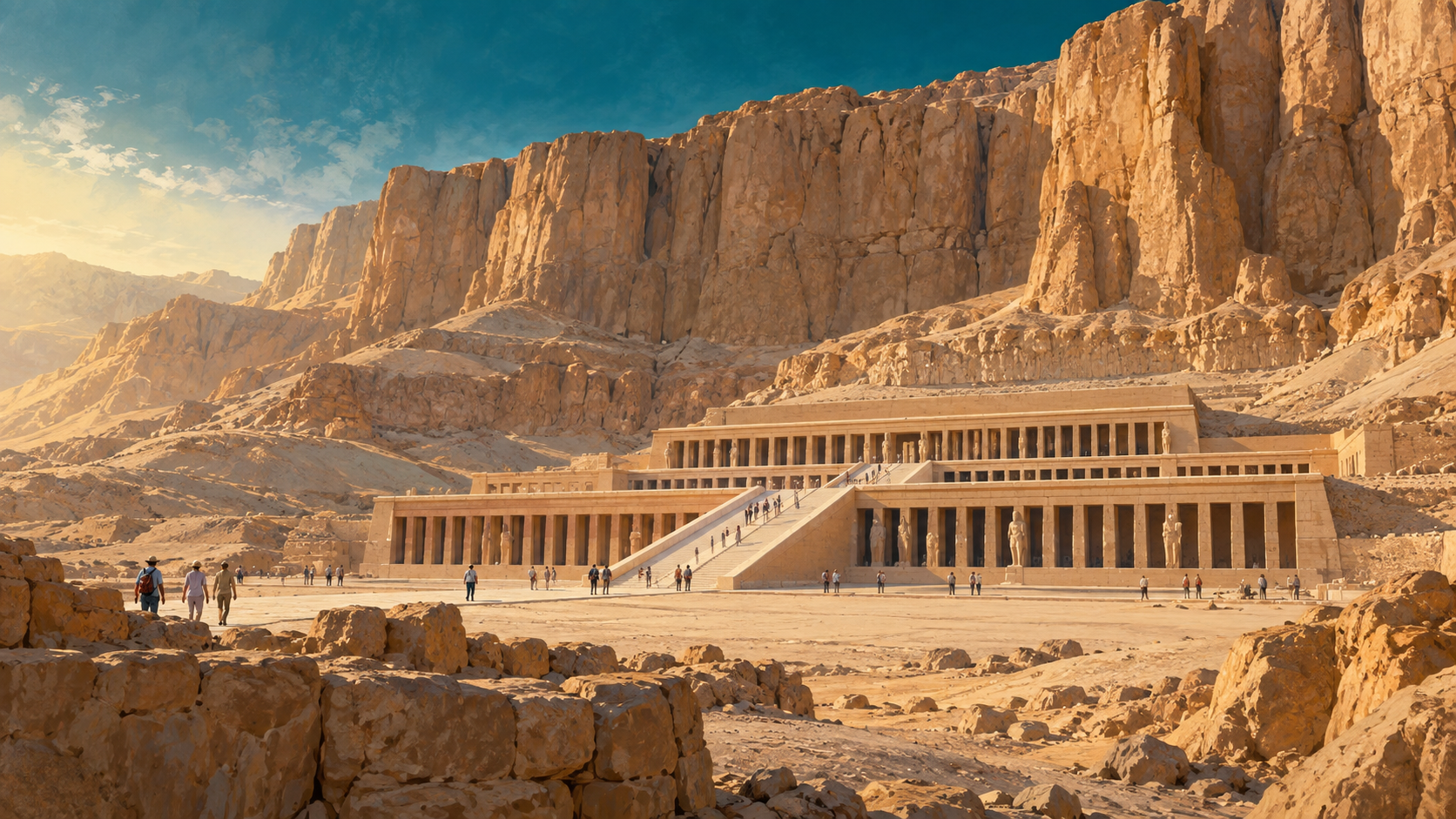
The private day tour through ancient Thebes starting in Luxor lists the Valley of the Kings in its itinerary. Our Luxor excursions offer further ways to explore. Ask for enough time with chosen tombs rather than concentrating only on the number of stops.
Questions visitors ask about the Valley of the Kings
Which tombs can I see on my travel date?
That depends on the tombs open and the admission you purchase. Have the current selection confirmed before setting your heart on a particular tomb.
Is Tutankhamun’s tomb always included in general admission?
Do not assume so. Ask specifically about access to Tutankhamun’s tomb and any separate tickets or conditions that apply.
Do I need to visit every tomb offered?
No. A few carefully chosen tombs with clear explanations can be more enjoyable and memorable than the largest possible programme.
Is this suitable for older travellers?
Suitability depends on your needs and the tombs selected. Steps, slopes, heat and time spent standing all need to be considered in the plan.
What do the boats and gods on the walls mean?
Many images accompany an imagined journey through the afterlife and the renewal of the sun god. The precise meaning depends on the tomb and the particular scene.
Is the Valley of the Kings the same place as Hatshepsut’s Temple?
No. Both are on Luxor’s west bank, but they are separate sights. The terraced temple is not an entrance to the royal tombs.
Sources: Egyptian antiquities authority: Valley of the Kings, Global Egyptian Museum: Amduat and Griffith Institute, Oxford: discovery records.