Travel journal
Plan your Egypt journey well
Nebu Reisen editorial team
Published:
Updated:
Picture yourself at the foot of Khufu’s pyramid. One course of stone looks much larger than it ever did in a holiday photograph. You look up, struggle to find a familiar sense of scale and put your phone away for a moment. That is a lovely place to begin Giza: with wonder, before the names and numbers.
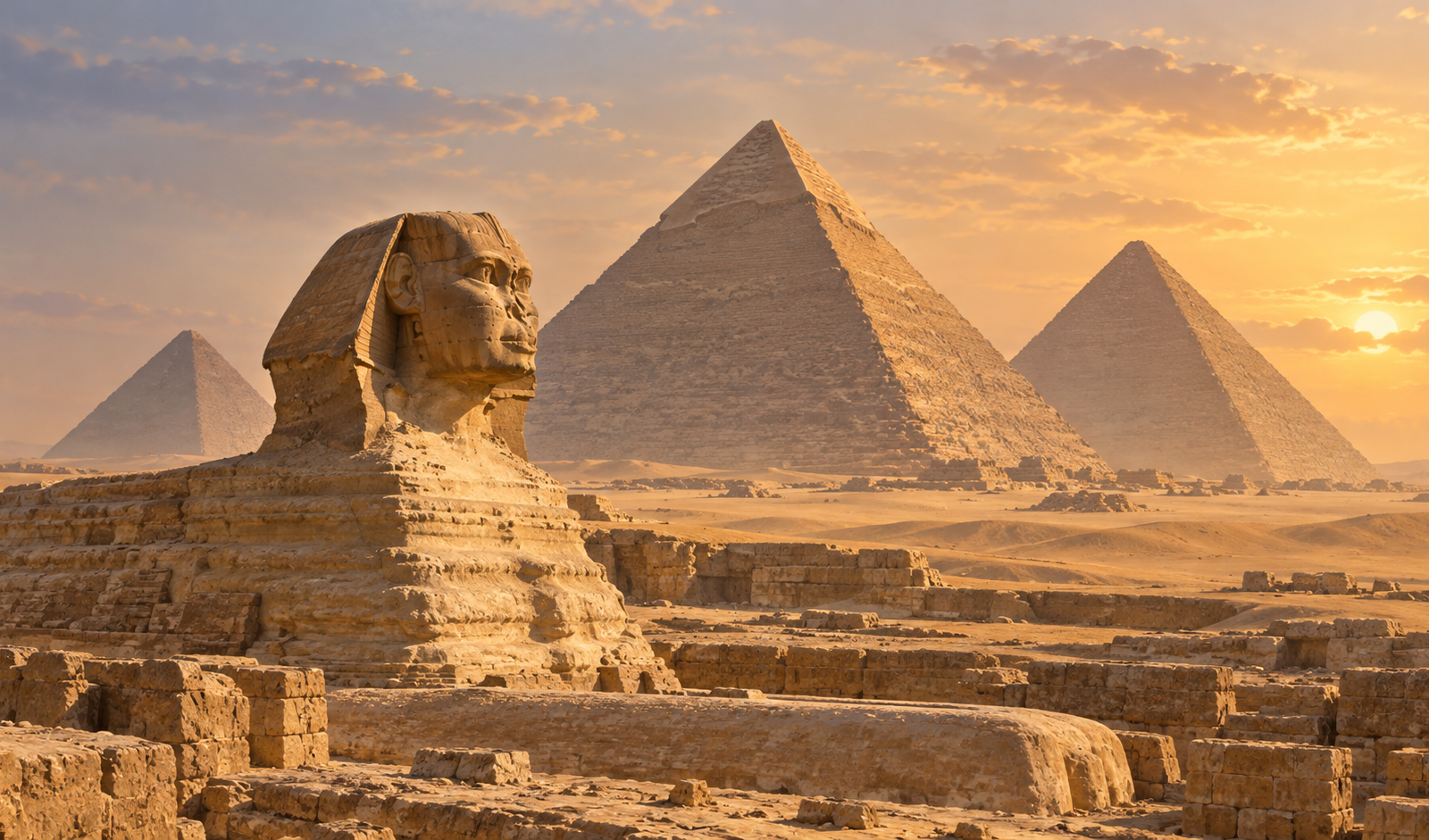
The plateau near Cairo brings together the pyramids of Khufu, Khafre and Menkaure, the Great Sphinx and the remains of an entire royal funerary landscape. Understanding their connections gives you more than three famous buildings. It opens a window onto the way pharaohs imagined power, memory and life after death.
Three pyramids, three kings
The largest pyramid belongs to Khufu, the second to Khafre and the third to Menkaure. They were built during the Fourth Dynasty of the Old Kingdom. Ask your guide to point out all three from a suitable viewpoint before you concentrate on individual monuments. Together, they make the relationship between architecture and landscape much easier to grasp.
Khafre’s pyramid can appear taller from certain angles, although Khufu’s is the larger building. Look beyond the perfect photograph. Notice the ground on which they stand and the surviving casing near Khafre’s summit. Those pale surfaces help you imagine the finished monuments, rather than assuming that today’s exposed stone courses were always the intended appearance.
A king was planning his eternity
Each pyramid belonged to a larger complex. A valley temple, causeway, funerary temple, smaller pyramids and the tombs of members of the royal court formed an ordered setting. Priests presented offerings for the dead king. Egypt’s antiquities ministry explains this as part of the continuing care of his divine aspect in the afterlife.
That makes the spaces between the landmarks worth your attention. Instead of imagining one lonely burial chamber in the sand, picture a landscape with people, responsibilities and rituals. Two useful questions for your guide are: where did the causeway run, and which temple belonged to this king? Suddenly, fragments of walls become parts of a connected story.
Ideas about rebirth tied kingship to divine order. With that belief in mind, you see more than an enormous stone shape: human builders gave a hope of eternity a visible form. The pyramids give that hope a scale that still makes an ordinary day feel extraordinary.
The Sphinx: a lion’s strength and a prince’s dream
The Great Sphinx stands beside Khafre’s complex. Its lion’s body and royal head combine physical strength with kingship. Archaeological evidence points towards its construction under Khafre. That connection helps you see the Sphinx as part of a royal landscape, not only as a famous face.
In later centuries the Sphinx was worshipped as a manifestation of the sun god. Between its paws stands the Dream Stela of Thutmose IV. Its royal account tells of a prince resting in the Sphinx’s shade and receiving a promise in a dream. Ask to hear the story here, where the landscape gives it meaning. This royal account connects the dream with a claim to the throne. It shows how closely the Sphinx, the sun god and a prince’s hopes could be woven together.
Then look back towards the pyramid and valley temple. The Sphinx is not a separate landmark somewhere else in Cairo. It belongs to this setting, whose shapes and connections are now much easier to appreciate.
A visit with room to enjoy it
- Find your bearings first. Have the main monuments explained before getting lost in individual dates.
- Spend time with one pyramid. Look at the stone courses and surrounding structures. Going inside is a separate choice, not a requirement.
- Enjoy the wider view. Agree how you will travel between viewpoints rather than walking every distance in the sun.
- Bring the story together at the Sphinx. Kingship, temple architecture and later solar worship meet here.
This is a suggested sequence, not a guaranteed itinerary. Access and traffic arrangements can change. If walking is difficult, discuss actual distances, uneven ground and vehicle boarding before booking. Supportive shoes, water and sun protection matter more than fitting another stop into an already crowded programme.
Pair the pyramids with the people behind them
The plateau supplies the monumental setting. The Grand Egyptian Museum near Giza introduces objects and images that help you understand such places. Combining them is worth considering, provided the day leaves time to enjoy each rather than rush through both.
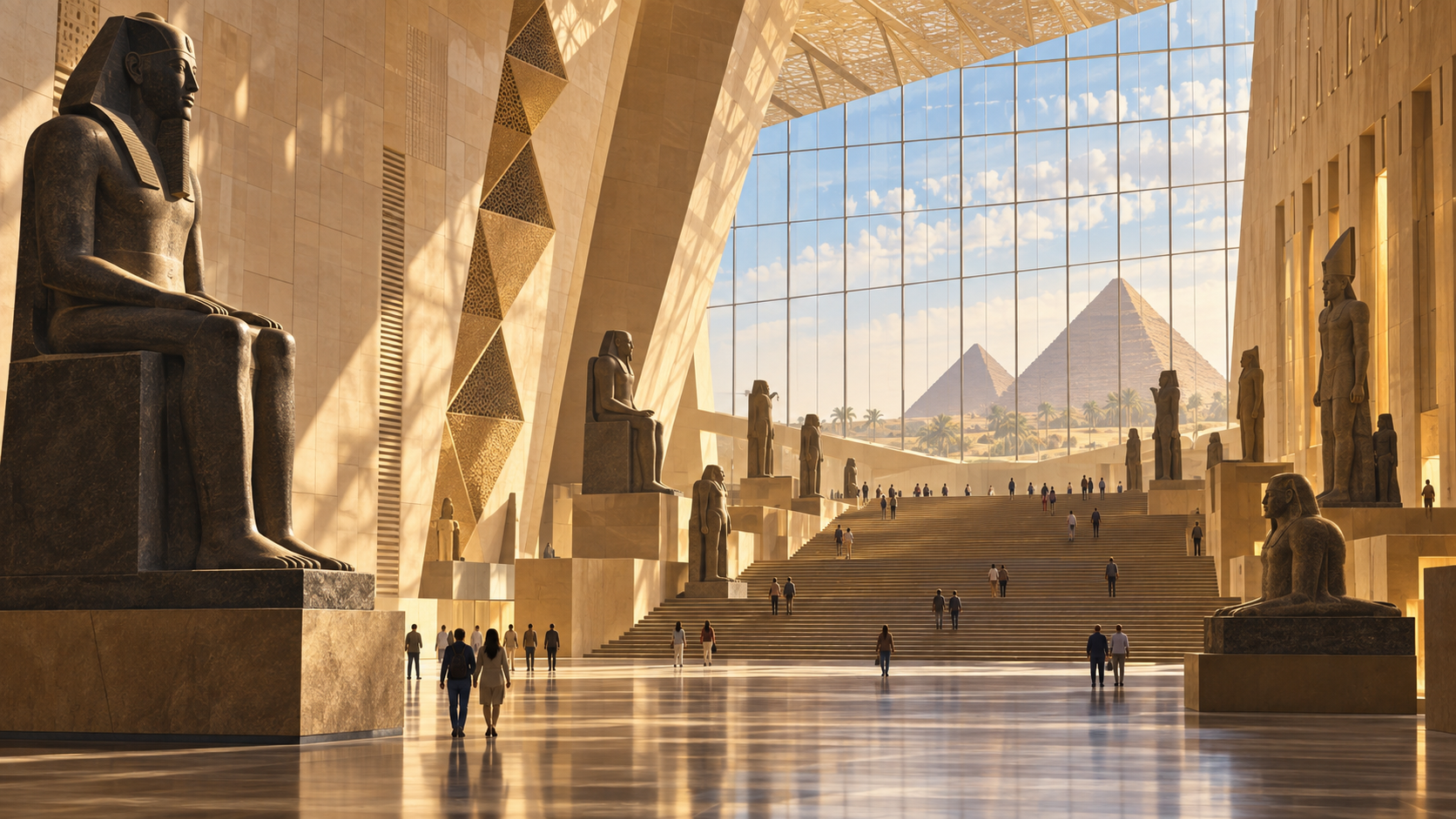
Nebu’s private three-day Cairo journey starting in Cairo lists Giza, the museum and Old Cairo. Guests staying by the Red Sea need a separately agreed journey to Cairo. Explore other Cairo excursions, or discuss the pace and places that matter to you through Nebu’s contact page.
Questions visitors ask about Giza
Do I have to go inside a pyramid?
No. The exterior monuments and their setting already make a rewarding visit. Interior routes can involve tight spaces and physical effort, so choose according to your interests and mobility.
Is the Sphinx a long way from the pyramids?
It belongs to the plateau but occupies a different area from the familiar panoramic viewpoints. Include the journeys between individual stops in your planning.
Does a tour include every entrance ticket?
Only what its confirmed offer states. General admission to the plateau does not automatically cover particular interior visits. Ask for the desired entrances to be listed clearly.
Can older travellers enjoy Giza comfortably?
A suitable pace and thoughtfully arranged transfers can help. The site remains exposed and partly uneven. Explain any walking limitations before choosing the programme.
What should I notice beyond the classic photograph?
Look for causeways, smaller pyramids and temple remains. Ask what each did. These details turn the panorama into a royal landscape with a purpose.
Can I visit Giza and the GEM together?
Yes, with enough time. Agree your museum priorities and rest breaks instead of expecting to see every exhibit and every plateau detail in one packed visit.
Historical references: Egyptian Ministry of Tourism and Antiquities: Giza Plateau and Great Sphinx. Confirm access and services for your travel date.