Travel journal
Plan your Egypt journey well
Nebu Reisen editorial team
Published:
Updated:
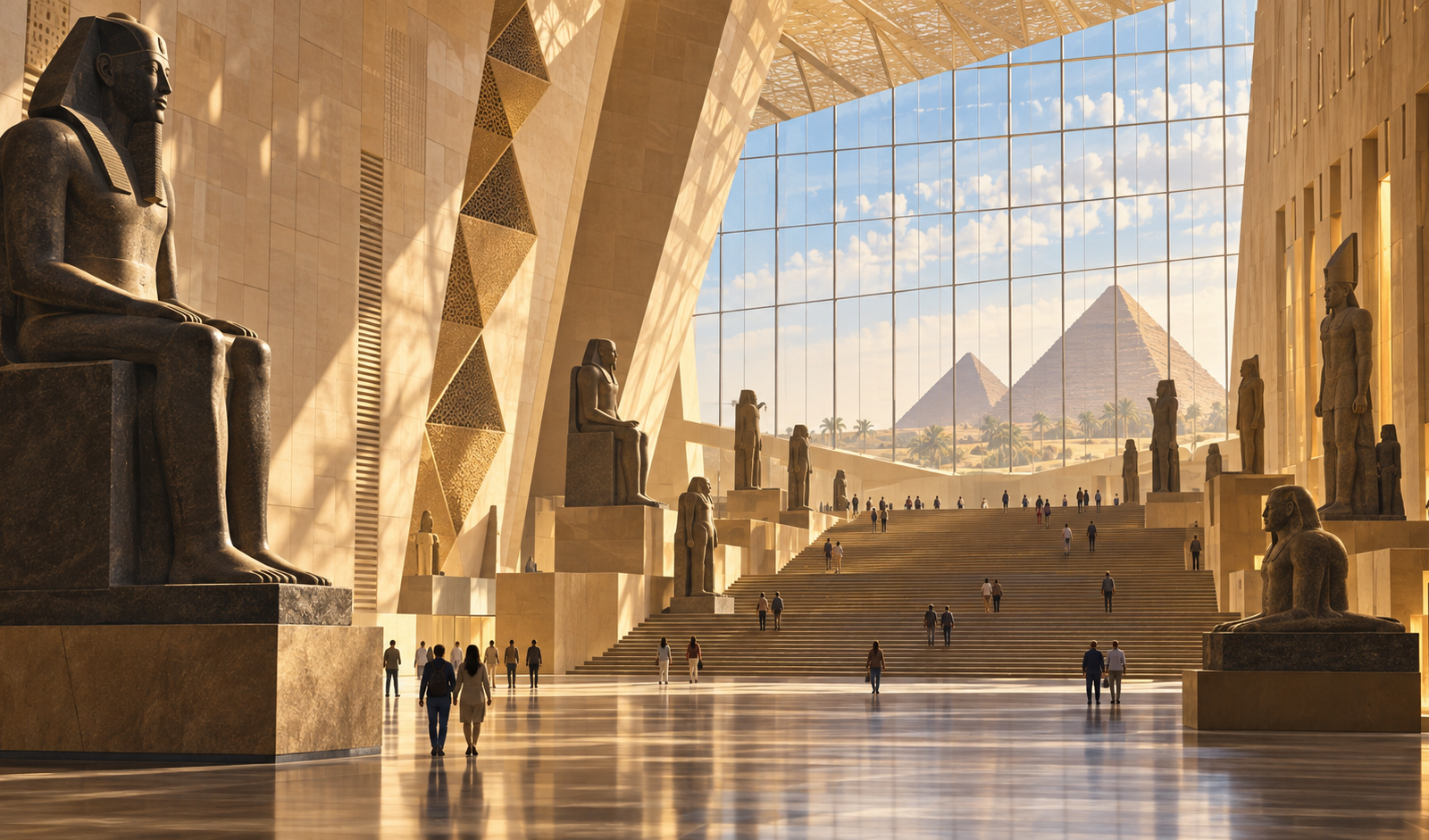
Imagine entering the Grand Hall. Ramesses II stands in front of you, large enough to make you lift your head. Yet a museum day need not begin with a calculation of how many rooms you can complete. A much nicer question is: which story would I like to take home?
The Grand Egyptian Museum, or GEM, is near Giza. Monumental royal images, Tutankhamun’s collection and objects from different periods give ancient Egypt faces and personalities. A rewarding visit needs clear priorities, an understandable route and enough quiet attention to enjoy even one small object properly.
Ramesses is a beginning, not just a meeting point
The statue of Ramesses II in the Grand Hall sets the scale. Look at its stance, face and royal symbols. Such images did more than record one individual. They expressed how kingship should appear: enduring, ordered and close to the gods.
This makes an inviting start even if you rarely visit museums. Instead of beginning with an entire dynastic chronology, compare the figure with the idea of a pharaoh you brought with you. Which details feel human, and which suggest something beyond ordinary life? Those questions will help you read royal figures later in Egypt’s temples.
The Grand Stairs introduce a journey to eternity
The museum’s presentation on the Grand Stairs connects royal images, divine houses, gods and the afterlife. Treat these as a useful thread, not examination subjects. Select a few works and ask why they mattered to the people of their time.
A royal image speaks about authority; part of a temple about the house of a god; a coffin about the hope of continuing after death. Those three ideas give unfamiliar names a place in the story. If stairs are difficult, discuss the suitable route and assistance with the museum or your organiser beforehand. Understanding a monument does not require climbing every step past it.
Tutankhamun’s gold is more than a famous face
The official ticketing website currently includes the Tutankhamun Galleries in the visit. This matters because older travel accounts may still describe a partial opening. Check the current programme for your date nonetheless, particularly if one specific object is your main reason for coming.
Before the golden burial mask, a familiar picture becomes a carefully designed idea. The museum explains that it connects the king with Osiris, ruler of the underworld, and Re, the sun god. Gold and blue materials therefore belong to a religious visual language as well as the object’s precious appearance.
Ask how this beautiful object was meant to offer protection and rebirth. Its interpretation connects precious materials with a deeply human hope: the king was meant to continue living. The story of its discovery then takes you to the people who brought his burial world back into view after so many years.
From a tomb in Luxor to a museum near Giza
Tutankhamun’s tomb was discovered in 1922 by Howard Carter and his team, including Egyptian colleagues. The objects and their original burial setting are not in the same place today. The Valley of the Kings near Luxor supplies the landscape and tomb context; the GEM presents the collection.
This is a rewarding connection on a longer journey. See a royal tomb first and then its objects and protective imagery, or do it in the opposite order. Either can change the way you look. The considerable distance deserves a separate travel stage, not an incidental addition to a museum afternoon.
Make the visit feel alive
- Choose one face. Ask what idea of kingship it communicates.
- Take away a story about the gods. Osiris and Re give Tutankhamun’s mask a different meaning.
- Look closely at a smaller object. Its material and age matter, but so does the person who used or commissioned it.
- Allow a proper break. Regaining your attention is more valuable than hurrying into another gallery.
The actual selection depends on displayed objects, access and your interests. Do not base a fixed route on works whose availability has not been checked. Older visitors should give standing time, walking distances and opportunities to rest the same attention as the list of masterpieces.
Giza outside, its stories inside
The Giza pyramids and Sphinx provide the monumental landscape. The museum brings you closer to the objects and ideas of the people who lived in such a world. Visiting both needs enough time; not every museum visit must be combined with an extensive plateau circuit.
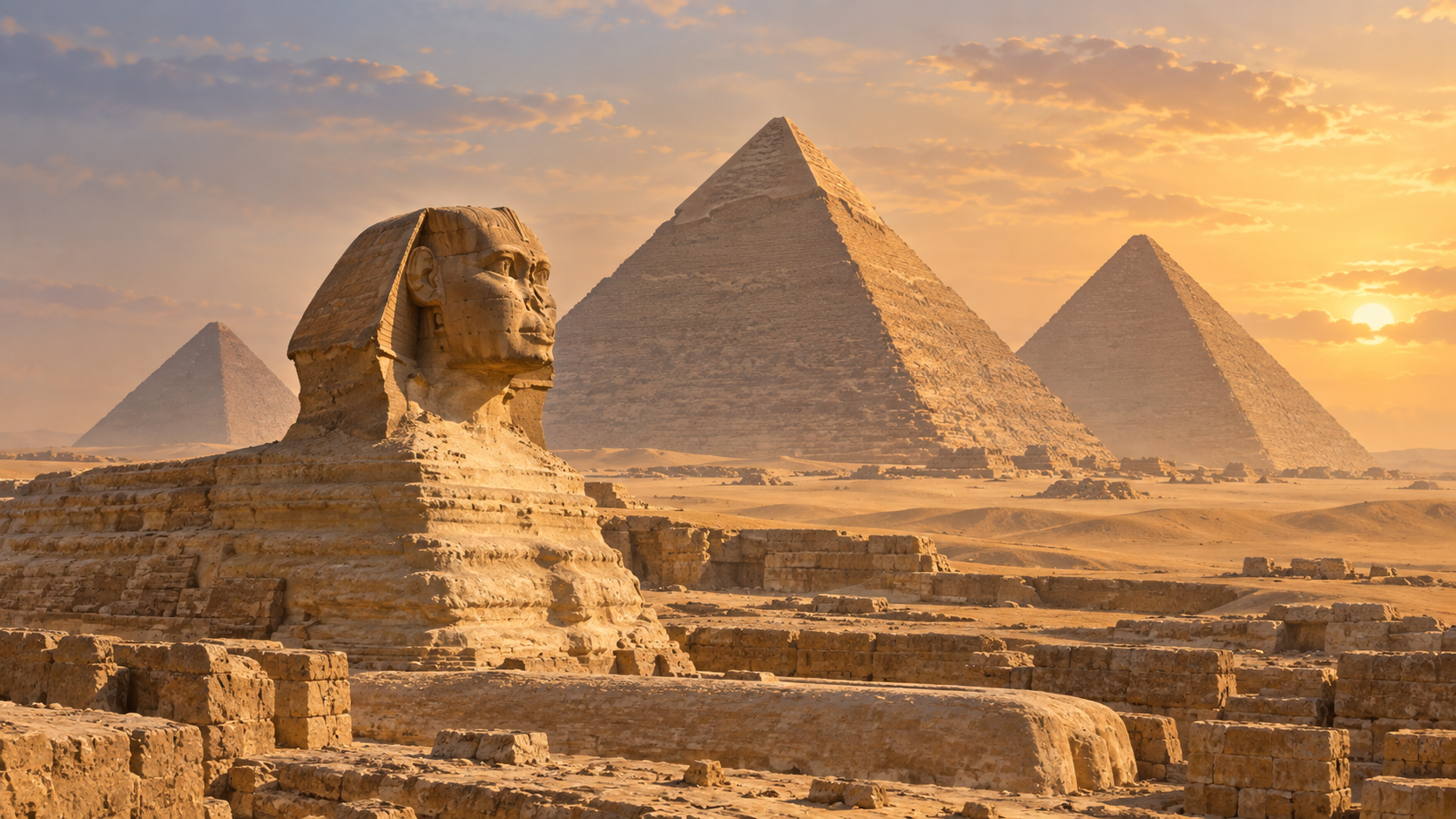
The private three-day Cairo journey starting in Cairo lists Giza, the GEM and Old Cairo. Other Cairo excursions offer different formats. When planning, it is perfectly reasonable to ask for a few well-told stories rather than the largest possible number of rooms.
Questions visitors ask about the GEM
Is the GEM the Egyptian Museum on Tahrir Square?
No. They are different museums in different locations. Check the precise museum name in your programme so that you know which collection and building you are visiting.
Are the Tutankhamun Galleries open?
The official ticketing website currently lists them as part of the visit. Check the arrangements for your date and any special restrictions.
Can I see the whole museum in one day?
Seeing every detail is not a useful holiday target. Choose themes and a few highlights. Your attention and enjoyment will last longer.
Is it comfortable for older visitors?
A suitable programme can help. Discuss walking, standing, lifts or appropriate routes and assistance beforehand. A modern building’s size does not automatically make the visit effortless.
Can I take photographs everywhere?
No. Official rules contain restrictions, including marked areas in the Tutankhamun Galleries. Follow signs and staff instructions; flash and certain equipment may be prohibited.
How do I avoid a long information lecture?
Ask for stories around selected works and room for your own impressions. A face, a religious idea and a personal object make a useful thread through the visit.
Sources: official GEM ticketing website and visitor rules, the museum’s burial-mask interpretation, Grand Stairs and Metropolitan Museum: Discovering Tutankhamun. Check current access before travelling.