Travel journal
Plan your Egypt journey well
Nebu Reisen editorial team
Published:
Updated:
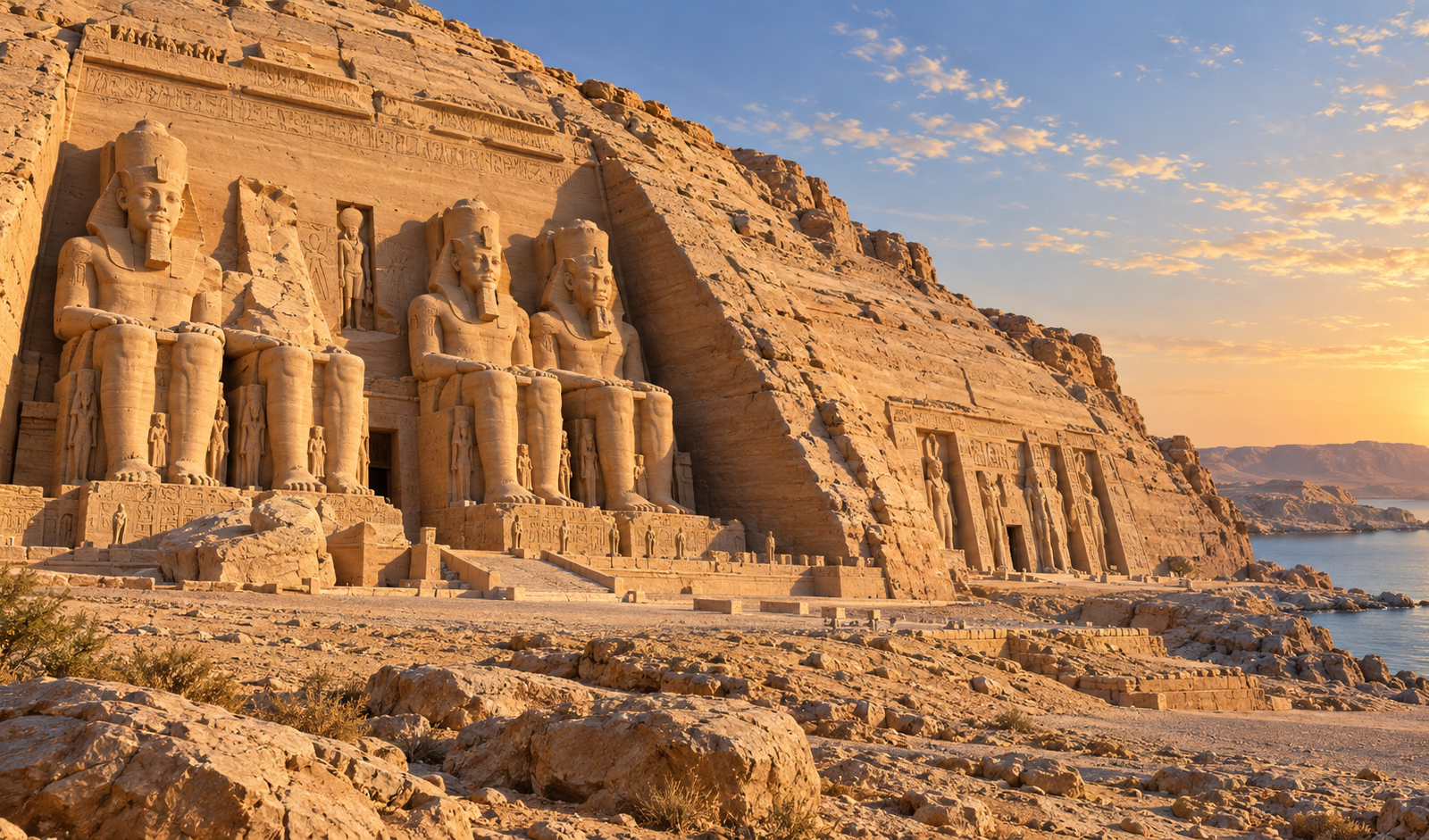
Imagine the desert journey is behind you. Four enormous royal figures sit in the rock ahead, with Lake Nasser shimmering nearby. For a moment, nobody says much. Abu Simbel has that effect because landscape and royal ambition meet so directly here.
In Egypt’s far south you will find two rock-cut temples: the Great Temple of Ramesses II and the smaller temple dedicated to Hathor and Queen Nefertari. Both belong to the experience. Turning back after the famous facade photograph means missing the quieter story of a queen and a goddess.
Why Ramesses appears four times
Ramesses II had these temples created in the thirteenth century BC. All four seated colossi on the Great Temple’s facade portray the same ruler. They made kingship visible in a landscape also shaped by Egyptian power in Nubia. Their scale was a message, not simply decoration.
Look beside the royal legs for smaller family figures. Size arranges the royal world for the viewer. One of the great statues was damaged in antiquity; its fallen pieces belong to the story you see today. These traces remind you that the temples are not an untouched stage set. They survived earthquakes, changes and human intervention.
From the bright forecourt into the world of the gods
Standing royal figures accompany the route through the Great Temple. Facade, hall and sanctuary build their effect progressively. Before entering, ask one simple question: what did Ramesses want a visitor to think about him after walking this route?
In the innermost sanctuary sit Amun-Ra, Ra-Horakhty, Ptah and a deified Ramesses. The king placed himself in divine company and made his religious vision of kingship visible. Notice the seated group: Ramesses wanted posterity to recognise his place within this divine order.
Have one carved scene explained rather than photographing every wall quickly. Figures, gestures and hieroglyphs were chosen carefully. A clear account of an offering scene can make the space meaningful more effectively than a string of disconnected dates.
Nefertari and Hathor deserve their own moment
The smaller temple stands north of the larger one. Its dedication connects Nefertari with Hathor, a goddess associated with motherhood, music and divine protection, among other roles. On its facade the queen’s statues are the same size as her husband’s, a particularly striking feature.
Compare that with the much smaller family figures outside the Great Temple. The same royal building programme presents a woman differently here. It is not a simple declaration of equality in modern terms, but it is a remarkable statement of royal and religious significance. Give this sanctuary its own attention, rather than whatever time remains after Ramesses.
Sunlight in the sanctuary: a special event
In February and October, sunlight reaches figures deep inside the Great Temple. Egypt’s antiquities ministry gives the dates as 22 February and 22 October. The alignment is fascinating, but it does not happen during every visit.
The often repeated claim that these are certainly Ramesses’ birthday and coronation day should not be presented as established fact. Travelling specifically for the illumination requires a programme arranged around the event. Crowds, access and viewing conditions affect the experience; nobody should promise an uninterrupted view.
The world saved a mountain
The Aswan High Dam threatened the temples with the rising waters of Lake Nasser. An international UNESCO campaign helped dismantle them and rebuild them higher up. Abu Simbel’s relocation was completed in 1968. The monuments are ancient; their current position reflects a modern rescue.
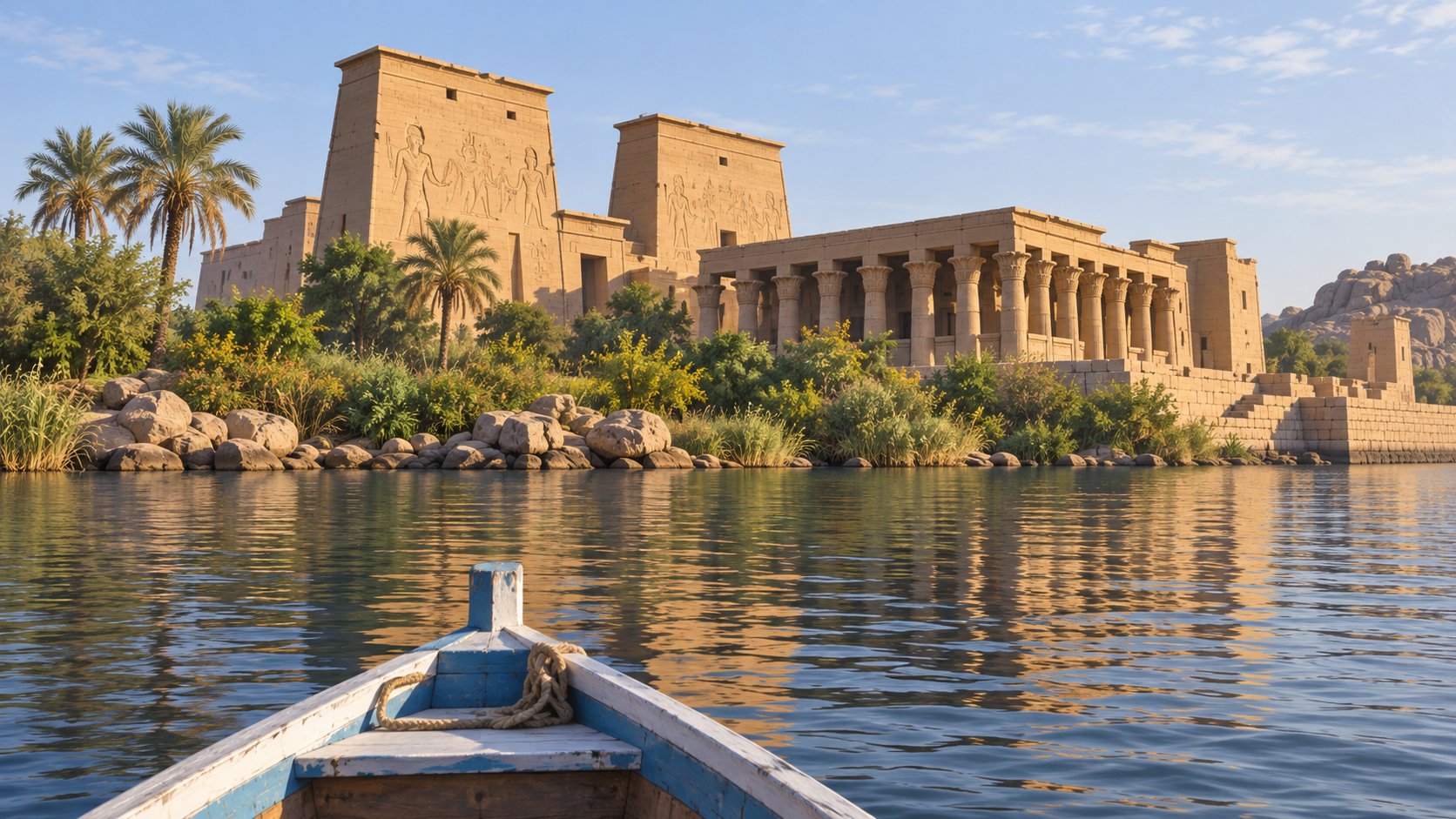
This second story does not diminish the place. It adds the determination of people who refused to let important heritage disappear. The Isis Temple at Philae was also moved. Seeing both gives the rescue of the Nubian monuments a powerful, tangible meaning.
Make room for the journey
Abu Simbel is not a quick city stop within Aswan. Treat the outward journey, breaks and return as important parts of the day. At the site, enjoy the Great Temple, the smaller sanctuary and a deliberate look at the landscape. The order should respond to conditions and your energy.
The four-day Nile journey starting in Aswan and ending in Luxor lists Abu Simbel in its day plan. Reaching the temple is not a direct sailing from a Nile cruise ship. Have the transfer and services confirmed in writing. Other Egypt round trips offer ways to distribute long distances across several days.
Questions visitors ask about Abu Simbel
Does the smaller temple belong in the visit?
Give it a separate focus. Nefertari and Hathor’s story complements the Great Temple. Check that both sanctuaries are included in your confirmed programme.
Are the temples in their original position?
No. Their ancient fabric was moved higher to protect it from the water and carefully reassembled there.
Will I see the solar illumination on any tour?
No. It is associated with particular February and October dates. An ordinary visit offers different rewards and should not be sold as the illumination event.
Can I fit Abu Simbel into a quick stop from Aswan?
The journey is a substantial part of the excursion. Choose a programme that suits your pace and includes breaks. A multi-day route can make the overall schedule easier.
What should older travellers discuss beforehand?
Seating comfort, rest stops, walking distances, sun exposure and routes inside both temples. Mention mobility restrictions early so the visit can be planned realistically.
How do I make the visit more memorable?
Take away a story from each temple: Ramesses among the gods and Nefertari’s unusual scale. Those ideas give the familiar facades a personal meaning.
Historical references: Egyptian antiquities ministry: Abu Simbel and UNESCO: Nubian Monuments. Confirm dates and tour services individually.