Travel journal
Plan your Egypt journey well
← All articlesLuxor’s famous places look close on a map but not automatically in an itinerary. Nile crossings, entrances, tomb choice, heat and crowds change the pace. A thoughtful provider does not promise “everything”; they show which visits will be substantial and which are brief.
Order East and West Bank deliberately
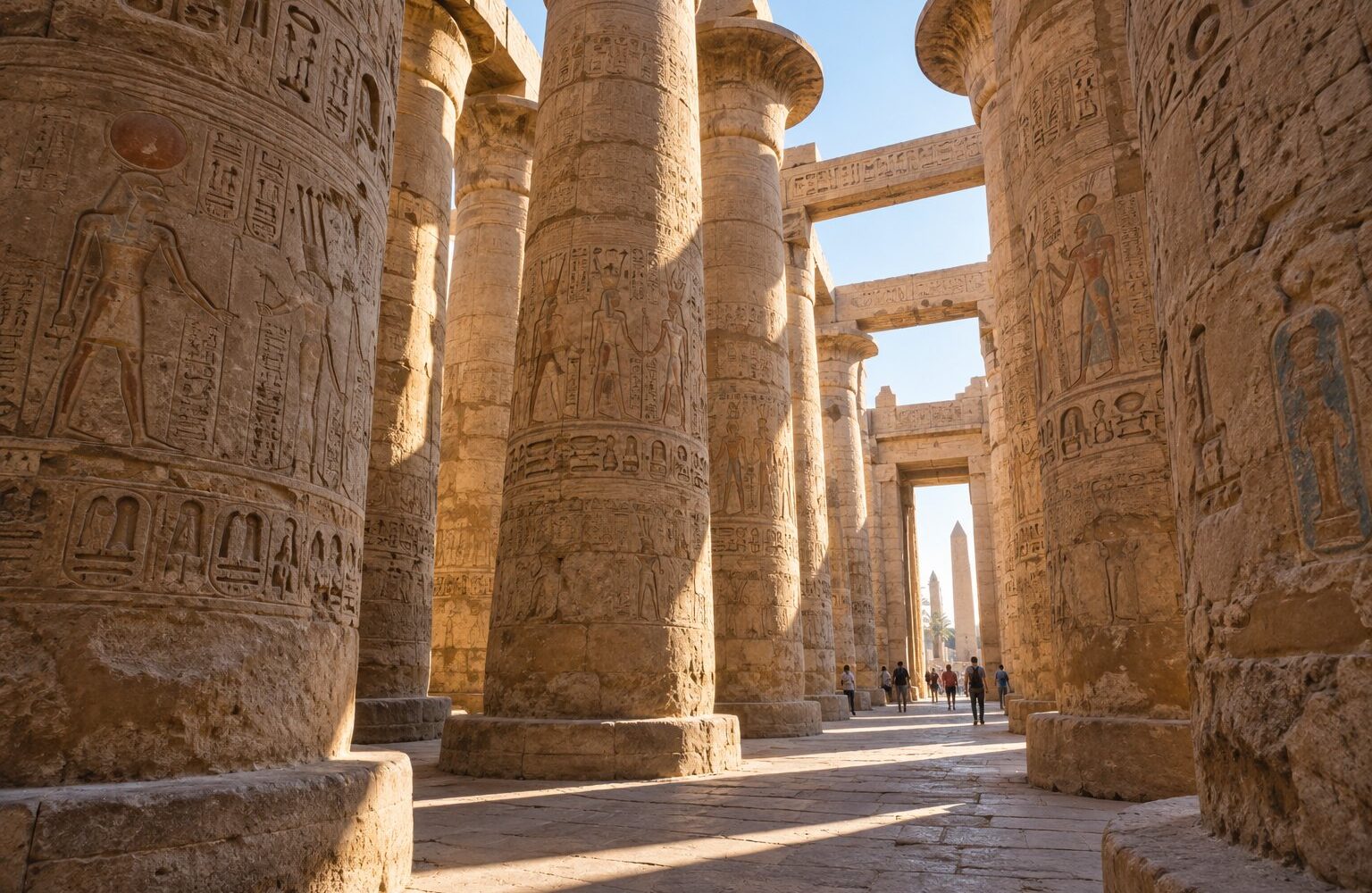
Karnak and Luxor Temple sit on the East Bank; the royal valleys and many memorial temples are west. Repeated crossings cost time. Ask whether the route groups sites geographically and uses a late temple window intelligently instead of shuttling back and forth.
The arrival point changes the order. A West Bank hotel, cruise vessel, train or Hurghada transfer creates a different start. One standard programme cannot suit all of them. The provider needs the actual arrival detail before giving times.
Choose tombs, not merely a number
Not every tomb is open at once or covered by the same ticket. Supplements and changing access need explicit treatment. Ask which selection the base ticket covers and who helps decide if a desired tomb is closed.
Interpretation often works best before entry, since guiding rules inside particular spaces may differ. A prepared guide gives context and sets a meeting point. Guests interested in photography should follow current rules and reserve time instead of assuming every image is permitted.
Heat changes the correct pace
Exposed West Bank sites can be demanding. Early start, water, head covering, cooled vehicle breaks and a sensible midday pause matter more than another tick on the list. Ask how the day can be shortened if fatigue develops without losing the group.
Discuss mobility specifically: steps, ramps, uneven surfaces and distances from parking. “Suitable for everyone” is not useful. Describe what the traveller can manage and ask the operating partner for a location-specific assessment.
Separate balloon and sightseeing logistics
A balloon flight is weather-dependent and operationally distinct. Combining it with temples requires a named handover, breakfast and meeting arrangement, plus a cancellation plan. The temple day should not silently shrink because balloon waiting time was never defined.
Compare the day with and without a balloon. One version prioritises sunrise; the other may offer early quiet at monuments. Both can work. What matters is that duration, return and possible cuts are understandable before booking.
Who actually organises what?
Nebu Reisen coordinates booking enquiries with independent local operators. In practice, Nebu helps translate preferences, combine suitable components and clarify open points; vehicles, guides, boats or other services may be delivered by separate businesses. The useful standard is therefore not a broad brand promise but the written confirmation for the specific date.
Ask who is responsible on the day, which pickup zone applies, what language the guide will use, how cancellation works and what happens after a weather or timetable change. Only then can two offers be compared fairly. This editorial guide is not an independently tested ‘best of’ ranking and it does not replace current operational confirmation.
Check a Luxor plan in six points
- Starting point and bank crossings follow a logical route
- Real visit durations replace a list of names
- Tomb and supplement tickets are transparent
- Heat, water and rest are planned
- Mobility requirements assessed by location
- Balloon cancellation has a clear effect on the core day
Frequently asked questions
Must both banks be covered in one day?
No. A deeper single-bank day may suit some interests better. Combined routes should avoid unnecessary crossings.
Are all tombs always open?
No. Access and ticket categories can change, so the intended selection needs a current check.
Is a balloon included in every Luxor tour?
No. It is a separate weather-dependent component and requires explicit confirmation.
Sources and notes
- Nebu editorial checklist; not an independent operator assessment.