
Travel journal
Plan your Egypt journey well
Nebu Reisen editorial team
Published:
A good Egypt itinerary depends less on how many places you can fit in and more on how comfortably you want to travel. Seven days can work for a focused first trip, while ten days gives much more room for Cairo, Luxor, Aswan and the Nile. With fourteen days, it becomes easier to add Abu Simbel, a slower pace or a few days by the Red Sea.
How many days do you really need in Egypt?
There is no single ideal length for an Egypt trip. The right amount of time depends on whether your priority is ancient history, a Nile cruise, Cairo, the Red Sea or a combination of several regions. For most first-time visitors, the biggest mistake is trying to see too much too quickly.
Is 7 days enough for Egypt?
Yes, but one week works best when the itinerary is focused. A seven-day trip can include Cairo and Giza together with Luxor and part of the Nile region. It is also possible to include Aswan, but doing so means careful planning and a fairly active schedule.
For a first visit, a realistic seven-day route might include Cairo and Giza, Luxor, and a focused Nile or Aswan section. Trying to add Cairo, Luxor, Aswan, Abu Simbel and a Red Sea stay into the same week will usually make the trip feel rushed.
See an example route: 7 Day Egypt Tour: Cairo, Nile and Abu Simbel.
Is 10 days enough for Cairo, Luxor and Aswan?
For many first-time visitors, ten days offers a better balance. It gives enough time to experience Cairo without immediately moving on, spend meaningful time in Luxor, travel along the Nile and include Aswan. It also makes Abu Simbel much easier to add.
A ten-day itinerary can combine Cairo and Giza, Luxor, a Nile cruise or Nile Valley journey, Aswan and Abu Simbel without forcing a hotel change every day.
Compare this with Nebu’s 10-day Egypt tour with Cairo, the Nile and Abu Simbel.
What can you add with 14 days?
Two weeks gives you much more flexibility. Instead of simply adding more sightseeing, the extra time can improve the pace of the whole trip. You may choose to spend longer in Cairo, add extra time in Luxor, visit Abu Simbel without rushing, take a longer Nile cruise or finish with Hurghada or another Red Sea destination.
For travellers interested in both culture and relaxation, fourteen days is particularly useful because a Red Sea stay can be added without reducing time in the main historic cities.
See the 14-day Egypt tour with Nile cruise.
What is the best Egypt route for a first-time visitor?
For most first-time travellers interested in history and culture, the most logical route combines Cairo, Luxor and Aswan. A Nile cruise can connect Luxor and Aswan, while Cairo is usually reached separately by domestic flight or another transport option.
Cairo and Giza
Cairo is often the starting point for first-time visitors. The main attractions include the Pyramids of Giza, the Sphinx, the Grand Egyptian Museum and historic Cairo. Visiting the capital first can also give useful historical context before travelling south.
Explore more in our Cairo and Giza planning guide or browse the Cairo destination page.
Luxor
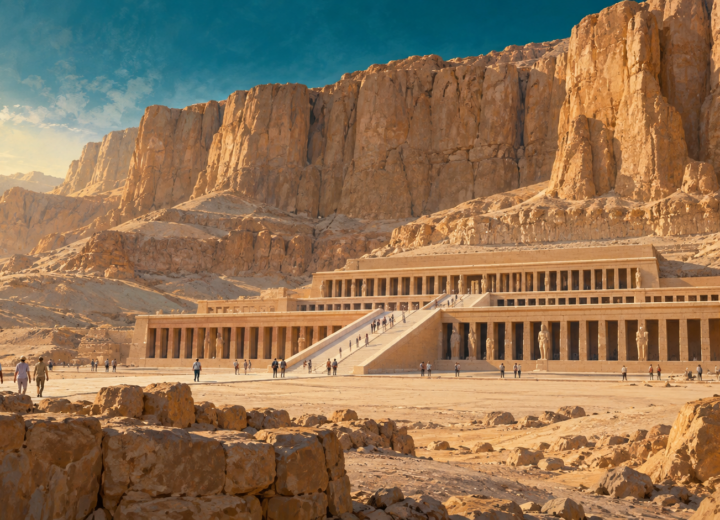
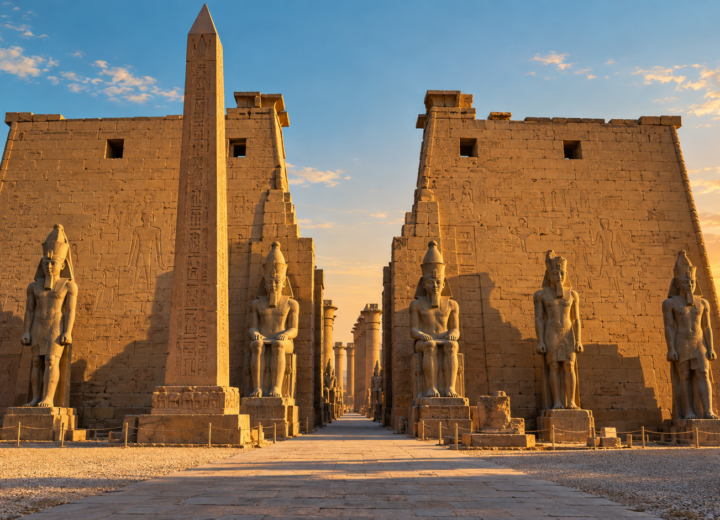
Luxor deserves more time than many first-time itineraries allow. The city and surrounding area contain some of Egypt’s most important archaeological sites, including Karnak, Luxor Temple and the Valley of the Kings.
Rather than trying to see everything in a single rushed day, spending at least two sightseeing days in the Luxor area usually creates a better experience. For practical planning, see Experience Luxor: Temples, Royal Tombs and Stories by the Nile.
Aswan
Aswan offers a noticeably different pace from Luxor. It is known for its Nile scenery and sites such as Philae Temple, and it is also the main starting point for trips to Abu Simbel.
Read more about Philae Temple or explore the Aswan destination page.
Nile cruise
A Nile cruise is one of the easiest ways to connect Luxor and Aswan while visiting important sites between the two cities. Typical stops can include Edfu and Kom Ombo. The main advantage is convenience: instead of changing hotels frequently, your accommodation travels with you.
You can compare the 5-day Nile cruise from Luxor to Aswan, the 8-day Nile cruise and the 4-day Nile cruise from Aswan to Luxor.
7-day Egypt itinerary
A realistic seven-day trip should remain selective.
| Day | Suggested plan |
|---|---|
| 1 | Arrive in Cairo |
| 2 | Giza Plateau and major museum visit |
| 3 | Travel to Luxor and begin sightseeing |
| 4 | Luxor West Bank and key temples |
| 5 | Continue towards Aswan or begin a short Nile section |
| 6 | Aswan highlights |
| 7 | Return or onward journey |
The trade-off is pace. A week can work very well, but there is little room for long detours, a Red Sea stay or several slower days.
10-day Egypt itinerary
Ten days makes it easier to build a more complete cultural journey.
| Day | Suggested plan |
|---|---|
| 1–2 | Cairo and Giza |
| 3–4 | Luxor |
| 5–7 | Nile cruise or Nile Valley route |
| 8 | Aswan |
| 9 | Abu Simbel |
| 10 | Return or onward travel |
This duration gives most first-time travellers a better balance between sightseeing and travel.
14-day Egypt itinerary
Two weeks allows the trip to breathe.
| Day | Suggested plan |
|---|---|
| 1–3 | Cairo and Giza |
| 4–5 | Luxor |
| 6–9 | Nile cruise |
| 10 | Aswan and/or Abu Simbel |
| 11–14 | Hurghada or another Red Sea stay |
This type of route works particularly well for travellers who want both cultural sightseeing and some time to relax.
Nile cruise or travelling by land – which is better?
When a Nile cruise makes sense
A cruise is useful if you prefer fewer hotel changes, organised movement between sites, a slower rhythm between sightseeing days and easy access to temples along the Nile. For first-time visitors, this can make the trip simpler.
When travelling by road or flight gives more flexibility
Independent transport can be better if you prefer choosing your own departure times, spending longer in individual cities or building a route that does not fit a standard cruise itinerary.
There is no universal winner. The better option depends on how much structure you want. If you want a more flexible programme, see Build your Egypt trip.
Should you visit Cairo before or after a Nile cruise?
Both choices are reasonable. Visiting Cairo first can be useful because museums and monuments provide historical context before you reach Luxor and Aswan. Others prefer to leave Cairo until the end, particularly when flight schedules make that route easier.
The decision should therefore be based on the overall itinerary rather than on a fixed rule.
Is Abu Simbel worth adding?
For many cultural travellers, yes. The temples of Abu Simbel are among Egypt’s most distinctive archaeological sites. However, they are located well south of Aswan, which means additional travel time.
Abu Simbel works particularly well in itineraries of ten days or more. On a very short trip, the extra journey may mean sacrificing time in Cairo, Luxor or Aswan.
Read our Abu Simbel guide.
Should you add Hurghada or the Red Sea?
Adding the Red Sea can work extremely well after a cultural itinerary. After several days of early starts, temples and transfers, many travellers appreciate a slower finish by the coast.
For a seven-day itinerary, adding the Red Sea normally means sacrificing important cultural stops. For ten days, it may be possible but still fairly tight. For twelve to fourteen days, the combination becomes much more comfortable.
You can also explore Hurghada trip ideas.
Guided tour or independent travel in Egypt?
This is one of the most important decisions when planning an Egypt trip.
Advantages of guided travel
- Historical context at temples and archaeological sites
- Help with transport between locations
- Less day-to-day planning
- More support with entry arrangements and timing
Advantages of independent travel
- More control over your schedule
- The ability to stay longer in places you enjoy
- More flexibility with meals and daily plans
- Freedom to change parts of the route
Some travellers choose a combination: independent travel between major destinations with local guides for archaeological sites.
How much travel time is lost between Egyptian cities?
This is something many first-time visitors underestimate. Cairo, Luxor and Aswan are far enough apart that transfers can take a significant part of the day. Domestic flights can save time on longer routes, while road or rail travel may suit travellers who prefer a slower journey.
When planning an itinerary, do not count only sightseeing days. Also allow time for hotel check-outs, airport transfers, embarkation, road journeys and possible schedule changes.
How to avoid making your Egypt itinerary too rushed
- Do not move city every day.
- Give Luxor enough time.
- Include some slower afternoons.
- Do not add every optional excursion.
- Allow time after early-morning visits.
- Remember that travel days still require energy.
- Prioritise the places that matter most to you.
Egypt has enough to see for several separate trips. You do not need to cover the whole country in one holiday.
Which Egypt itinerary is right for you?
| Trip length | Best suited to | Typical focus |
|---|---|---|
| 7 days | Limited holiday time | Cairo, Luxor and a focused Nile/Aswan section |
| 10 days | First-time cultural travellers | Cairo, Luxor, Nile, Aswan and possible Abu Simbel |
| 14 days | Travellers wanting a slower pace | Full cultural route plus Abu Simbel and/or the Red Sea |
If your main priority is seeing Egypt’s historical highlights without feeling constantly rushed, ten days is often a balanced option. If you also want time by the Red Sea, fourteen days is usually more comfortable. Seven days can still work very well when the itinerary is deliberately focused.
Frequently asked questions
Is 7 days enough for Egypt?
Yes, but the itinerary needs to be selective. Cairo, Luxor and part of the Nile region can fit into one week, but adding Abu Simbel and the Red Sea will make the trip much more demanding.
Is 10 days enough for Egypt?
For many first-time visitors, yes. Ten days allows enough time for Cairo, Luxor, Aswan and a Nile section, with the possibility of adding Abu Simbel.
How many days should I spend in Luxor?
Two full sightseeing days are useful for most first-time visitors. Travellers with a strong interest in ancient Egypt may want longer.
Is a Nile cruise worth it?
A Nile cruise is particularly useful for travellers who want to combine sightseeing between Luxor and Aswan with fewer hotel changes and a more relaxed travel rhythm.
Is Abu Simbel worth visiting?
For travellers interested in ancient Egyptian history, it can be one of the highlights of the trip. The main consideration is the additional travel time from Aswan.
Can I combine Cairo and a Nile cruise?
Yes. This is one of the most natural first-time Egypt combinations. Cairo provides the Pyramids and museums, while a Nile journey connects several major Upper Egypt sites.
Can I add Hurghada to a 10-day Egypt itinerary?
It is possible, but the itinerary can become busy. A stay of twelve to fourteen days generally gives more room for both cultural travel and beach time.
Is guided travel worth it for a first trip to Egypt?
For many visitors, a guide is particularly valuable at archaeological sites and for complicated transport days. Independent travel still works well for travellers who prefer more flexibility.
Plan your Egypt itinerary around the time you actually have
The best Egypt itinerary is not necessarily the one with the most stops. It is the one that gives you enough time to understand the places you visit and still enjoy the journey between them.
Explore our Egypt Tour Packages and Round Trips or build your own Egypt trip around your available time and interests.